
In the marine environment, rust is a silent and deadly threat to cargo control. Standard galvanized steel hooks and buckles can pit and snap after just a few seasons of exposure to saltwater, leading to potentially catastrophic cargo loss. For marine logistics, boat trailers, and offshore installations, 316 Marine Grade Stainless Steel is not just a luxury—it is a requirement for safety.
This guide details the engineering of our 316 Marine Grade Ratchet Straps. We compare the chemical properties of 316 SS against 304 SS and galvanized materials, explain the importance of UV-resistant black webbing, and outline why a fully stainless-steel assembly offers the only true 'maintenance-free' solution for saltwater environments.
The Chemistry of 316 Stainless Steel
The addition of Molybdenum in 316 stainless steel provides exceptional resistance to pitting and crevice corrosion caused by chlorides (salt). This ensures the hardware retains its full structural integrity even after years of direct seawater exposure.
Corrosion Resistance: 316 Stainless vs. Zinc-Plated Carbon Steel
The defining advantage of the 316 Marine Grade Ratchet Strap lies in its hardware composition. 316 stainless steel contains 2–3% molybdenum, forming a passive layer that withstands chloride attack—critical in saltwater environments. In contrast, a Standard Heavy Duty Ratchet Strap uses carbon steel with zinc plating, which often succumbs to red rust within 72 hours of continuous salt spray exposure. While the marine strap offers a working load limit (WLL) of 1,600 lbs to 3,333 lbs, lower than the zinc-plated strap’s 3,333–6,667 lbs WLL, the 316 hardware maintains its structural integrity and safety factor season after season without pitting or crevice corrosion. For operators in Marine & Shipping or coastal construction, that longevity eliminates costly mid-season replacements.
Working Load Limits and Derived Break Strengths
The 316 Marine Grade Ratchet Strap provides a WLL range of 1,600 lbs to 3,333 lbs. Under WSTDA guidelines, a 3:1 design factor is standard, yielding a practical break strength between 4,800 lbs and 10,000 lbs. By comparison, an Industrial Steel Load Binder handles capacities from 10 tons to 25 tons, illustrating the vast difference between tie-down and heavy lifting gear. When selecting marine straps, always verify that the WLL matches the load’s dynamic forces—snap loads in rough water can momentarily exceed static weight. For applications demanding higher WLL with corrosion resistance, pairing 316-rated end fittings with robust webbing from the High-Performance Industrial Webbing Roll ensures a balanced assembly.
UV-Resistant Polyester Webbing: Sun and Salt Defense
Black UV-resistant polyester webbing is the standard on the 316 Marine Grade Ratchet Strap, engineered to resist degradation from prolonged sun exposure and salt saturation. Unlike nylon, which can absorb up to 8% of its weight in water and lose strength, polyester retains full tensile performance when wet. The webbing is typically constructed from 1000D high-tenacity yarns, available in widths from 1 inch to 4 inches as seen in the High-Performance Industrial Webbing Roll, and resists mildew growth—a common failure point in tropical marine climates. Independent testing shows that UV-stabilized polyester maintains over 80% of its initial breaking strength even after 2,000 hours of accelerated UV aging, translating to a service life of 5–7 years in equatorial sun.
Compliance with WSTDA and MIL-Spec Standards
The 316 Marine Grade Ratchet Strap meets both WSTDA and MIL-Spec standards, a dual certification that guarantees saltwater readiness beyond generic consumer labels. WSTDA ensures that webbing and hardware comply with strict elongation, abrasion, and cyclic fatigue requirements, while MIL-Spec T-23548E often mandates 500-hour salt spray resistance (ASTM B117) with no red rust on loaded components. This level of validation makes the strap acceptable for Military & Defense deployments, offshore oil platforms, and commercial fishing fleets. For end users, specifying WSTDA/MIL-Spec straps means every component—from the Forged End Hooks to the Heavy Duty Ratchet Buckle Assembly—has been tested as a complete system rather than as isolated parts.
Related Resources
Related Products (4)

Polyester Webbing
Heavy-duty 2" polyester webbing engineered for cargo control and tie-down assemblies. Features low-elongation, high-tenacity polyester yarn with excellent UV, abrasion, and moisture resistance. Available in bulk rolls or cut-to-length, with 12,000 lbs breaking strength and a 3:1 safety factor for demanding transport and lashing applications.
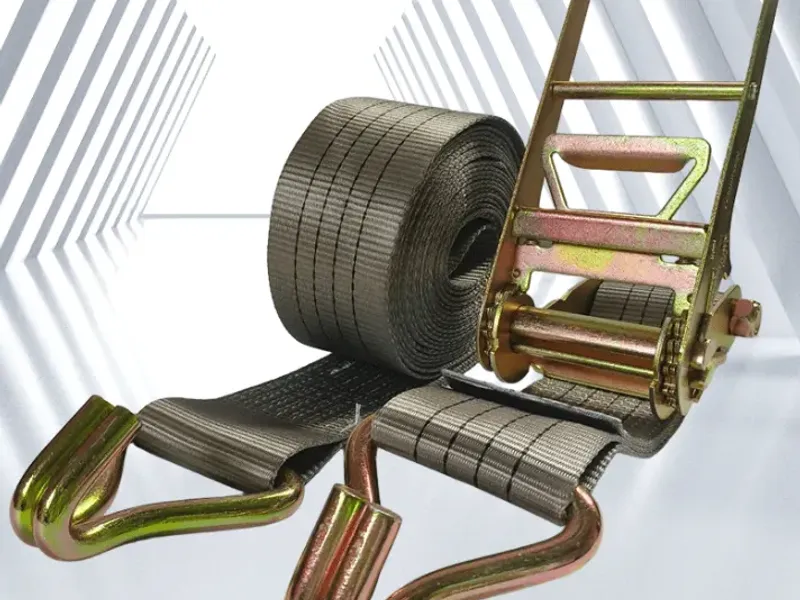
Standard Heavy Duty Ratchet Strap
Standard Heavy Duty Ratchet Strap with 2" polyester webbing and forged wire hooks, delivering a 10,000 lbs breaking strength and 3,333 lbs working load limit. Engineered for reliable cargo securement on flatbeds, trailers, and pickups, it offers corrosion-resistant hardware, low-stretch webbing, and a smooth-action ratchet for repeatable, safe tie-downs.
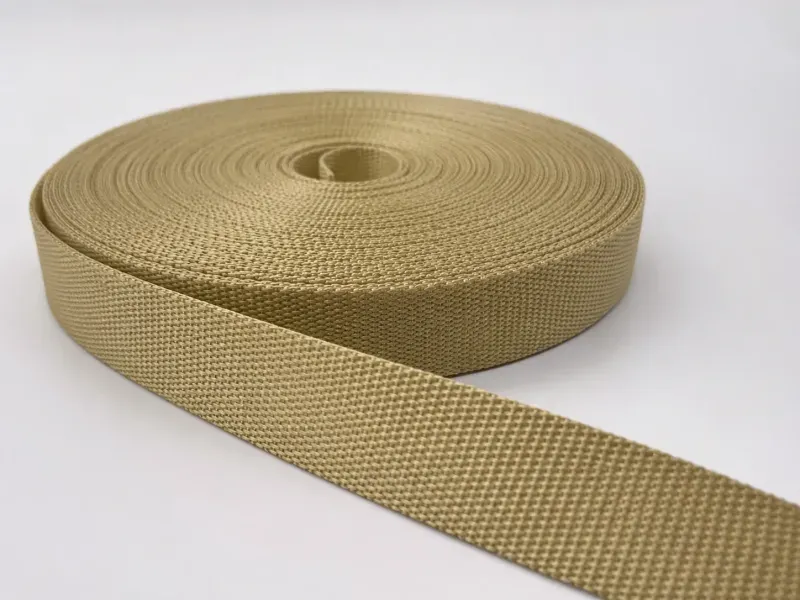
High-Performance Industrial Webbing Roll
High-strength 2-inch polyester industrial webbing roll engineered for cargo tie-downs, ratchet straps, and lifting slings. Delivers a 6,000 lb breaking strength with a 3:1 safety factor, superior abrasion and UV resistance, and low elongation. Ideal for OEM strap fabrication and heavy-duty load-securement applications requiring consistent, certified performance.
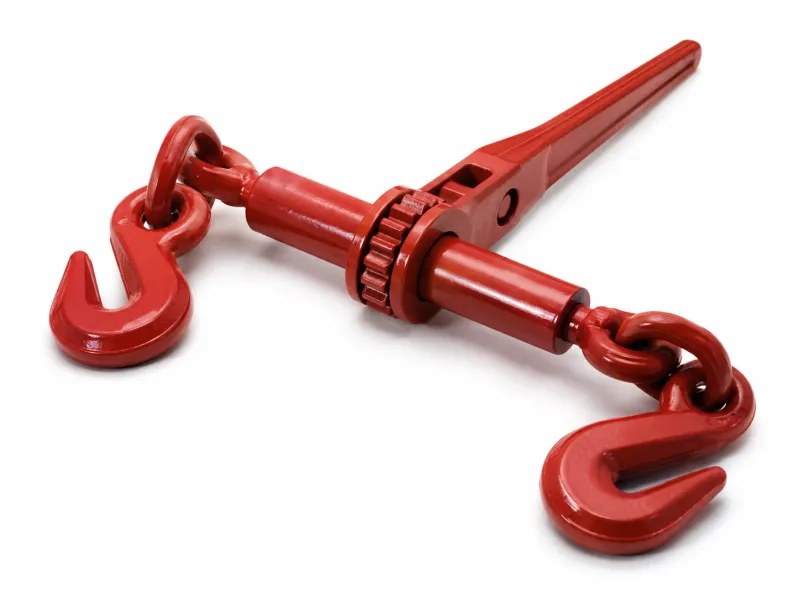
Industrial Steel Load Binder
Heavy-duty industrial ratchet load binder engineered for securing steel coils, machinery, and oversized freight. Features a drop-forged steel ratchet handle, hardened grab hooks, and a corrosion-resistant finish for demanding transport applications. Delivers reliable tensioning, EN 12195-2 and DOT compliance, and a 3:1 safety factor for professional cargo control operations.