

Selecting the right supplier for heavy‑duty load binders is critical for safe, compliant cargo securement in demanding environments. As of 2026, industry standards require heat‑treated steel construction, a minimum 3:1 safety factor, and WSTDA compliance for binders rated 10–25 ton capacity. Our sourcing network includes manufacturers that serve logistics, construction, and energy sectors with export‑quality products, ensuring every batch meets rigorous tensile and corrosion‑resistance benchmarks.
Understanding Heavy‑Duty Load Binders
Heavy‑duty load binders are mechanical tensioning devices used to secure cargo on flatbed trailers, railcars, and shipping containers. Unlike standard ratchet straps, lever‑type load binders provide higher mechanical advantage and are rated for capacities between 10 and 25 tons.
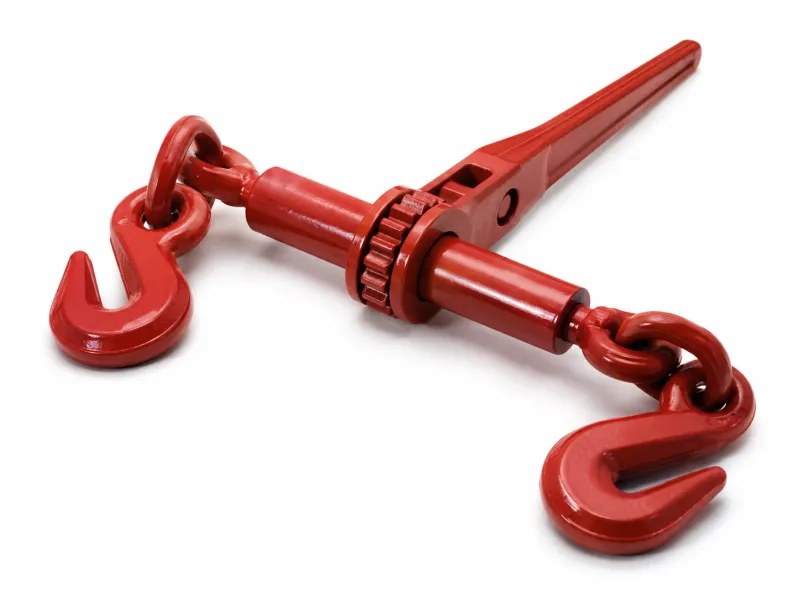
Key components include a forged steel lever, a hooked handle, and a winding mechanism that takes up slack and applies tension. The safety factor of 3:1 means the binder can withstand three times its working load limit before failure—a benchmark required by most North American and European regulations.
Compared to chain binders, lever‑type load binders are lighter, easier to operate, and less likely to damage cargo surfaces. They are the preferred choice for securing steel coils, lumber, machinery, and prefabricated structures.
Key Specifications for Industrial Use
When evaluating suppliers, verify that each product meets the following specifications:
- Material: Heat‑treated carbon steel or alloy steel for the lever and hooks
- Capacity: 10 ton, 15 ton, 20 ton, or 25 ton working load limit (WLL)
- Finish: Yellow paint, zinc plating, or epoxy coating for corrosion resistance
- Compliance: WSTDA (Webbing Suppliers & Manufacturers Association) and ANSI/CTU 1‑2023
- Safety Factor: Minimum 3:1 demonstrated by third‑party testing
| Specification | Minimum Requirement | Typical Supplier Offering |
| Breaking Strength | 3× WLL | 30–75 tons depending on size |
| Lever Length | 18–24 inches | 20 inches (15‑ton model) |
| Hook Type | S‑hook or J‑hook | Forged steel, zinc‑plated |
| Surface Finish | Paint or plating | Yellow chromate or epoxy |
| Certification | WSTDA / ISO 9001 | Full test reports provided |
Our Industrial Steel Load Binder line includes lever‑type binders in 10, 15, 20, and 25‑ton capacities, each heat‑treated and tested to exceed the 3:1 safety factor. See Industrial Steel Load Binder for full details.
Supplier Evaluation Criteria
The best load binder suppliers for heavy‑duty use distinguish themselves through manufacturing transparency, quality control, and global compliance support.
1. Certifications & Testing
- ISO 9001:2015 quality management
- WSTDA member in good standing
- Third‑party proof‑load and drop tests on each batch
- Material traceability (mill certificates for steel)
2. Production Capacity & Lead Times
- Bulk orders of 500+ units typically ship within 15–20 days
- Custom finishes or logo engraving add 5–7 days
- Emergency rush orders available for time‑critical projects
3. Global Shipping & Export Documentation
- FOB, CIF, and DDP terms available
- Commercial invoice, packing list, and bill of lading provided
- Compliance with DOT 39 CFR Part 1155 for cargo securement
Unlike generic hardware distributors, specialized manufacturers offer engineering support, load‑calculation assistance, and on‑site training for safe binder use.
Applications & Industries Served
Heavy‑duty load binders are essential across multiple sectors where cargo movement poses safety and regulatory risks.
- Construction & Infrastructure: Securing steel beams, rebar bundles, and prefabricated components on flatbed trucks.
- Logistics & Transportation: Daily use in freight yards and intermodal terminals for container and trailer load stabilization.
- Oil, Gas & Energy: Tying down drilling equipment, pipe spools, and turbine blades during transport.
- Aerospace: Moving aircraft components and engine parts with precision tensioning.
- Renewable Energy: Securing wind‑turbine blades and solar panel frames on oversized loads.
For detailed guidance on cargo securement in transportation, explore our Cargo Securement & Transportation resource.
How to Choose the Right Supplier
Selecting a supplier involves more than comparing unit prices. Consider these decision factors:
1. Verify Compliance Documentation – Request WSTDA certificates and test reports before placing an order.
2. Assess Manufacturing Capability – Visit the facility or request a virtual tour to confirm heat‑treating and forging processes.
3. Check Bulk Pricing Tiers – Volume discounts typically apply at 500, 1,000, and 5,000‑unit thresholds.
4. Evaluate After‑Sales Support – Reputable suppliers offer replacement parts, warranty claims, and technical consultation.
Our sourcing team works directly with ISO‑certified factories in North America and Europe, ensuring consistent quality and competitive pricing for large‑scale procurement.
Frequently Asked Questions
What is the minimum safety factor for heavy‑duty load binders?
Industry standards (WSTDA, ANSI/CTU 1‑2023) require a minimum 3:1 safety factor. This means the binder’s breaking strength must be at least three times its working load limit. For a 15‑ton binder, the breaking strength should be 45 tons or greater.
Are lever‑type load binders compliant with DOT regulations?
Yes, when they meet 49 CFR §393.100–393.136 requirements. Look for binders that are WSTDA‑listed, have a 3:1 safety factor, and include clear capacity labeling. Our Industrial Steel Load Binder series is tested and certified for U.S. and Canadian highway transport.
What is the typical lead time for bulk orders of 1,000 units?
Standard lead time is 15–20 days from order confirmation to shipment. This includes material procurement, heat treatment, assembly, quality inspection, and packaging. Custom finishes or logo engraving may add 5–7 days. Rush production is available for emergency orders at a premium.
Can load binders be customized for specific cargo types?
Yes. Suppliers can modify hook geometry, lever length, and surface coating to suit particular loads. For example, J‑hooks are preferred for securing round logs, while S‑hooks work better with flat steel plates. Custom color coding (e.g., yellow for 10‑ton, red for 20‑ton) is also available for site safety.
How do I verify a supplier’s quality certifications?
Request a copy of the supplier’s ISO 9001:2015 certificate and WSTDA membership letter. Additionally, ask for third‑party test reports that include proof‑load and drop‑test results for each binder model. Reputable manufacturers provide these documents within 48 hours of inquiry.
Related Resources
Related Applications
Related Industries
Source certified heavy‑duty load binders from verified manufacturers for logistics, construction, and energy sectors
Request a Heavy‑Duty Load Binder Quote