
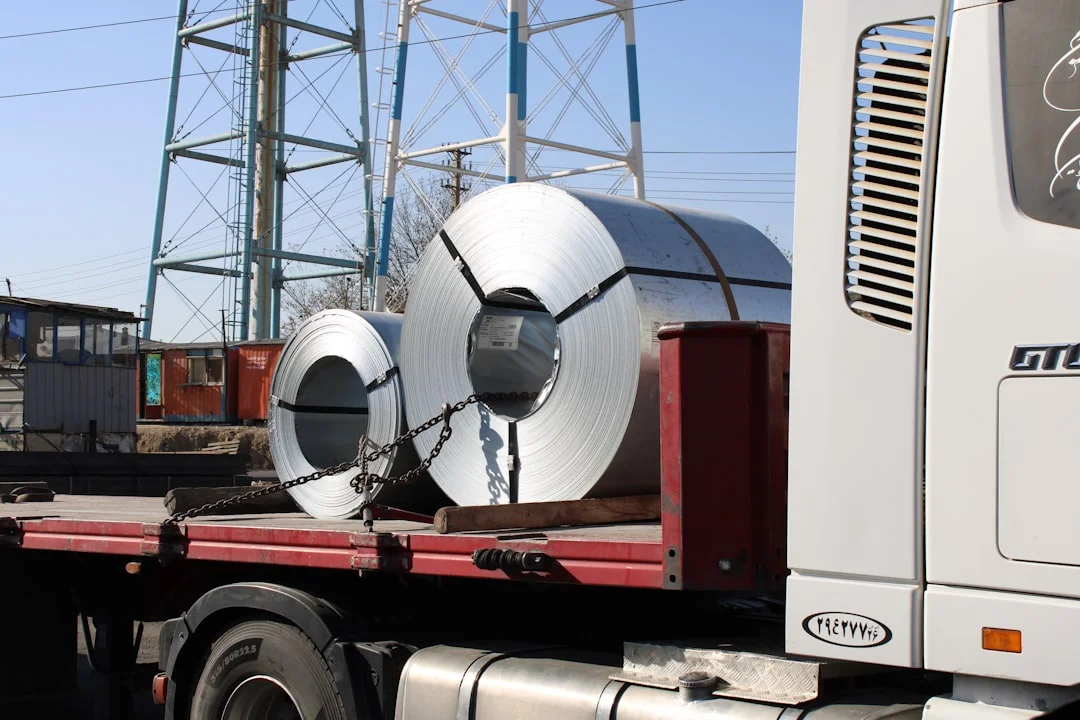
Inspecting industrial steel load binders before committing to bulk orders is critical for safety, compliance, and operational reliability. As of 2026, the cargo securement industry continues to see load binder failures linked to substandard materials, inadequate heat treatment, and mislabeled capacity ratings. Whether you're sourcing for trucking & logistics operations, construction & infrastructure projects, or military & defense applications, knowing how to inspect industrial steel load binders from suppliers protects your supply chain and your team.
This guide walks you through the exact inspection process we use when evaluating load binders for wholesale and export orders. From verifying heat-treated steel composition to confirming the 3:1 safety factor, each step is designed to help you identify quality suppliers and avoid costly defects. We prep bulk kits every week, and our QC checks each batch against the specifications below.
Why Load Binder Inspection Matters
Industrial steel load binders are primary securement devices in cargo transportation. A single failure under tension can shift tons of freight, damage infrastructure, and endanger personnel. Unlike lower-grade binders that may fracture or deform under load, properly inspected units maintain structural integrity at rated capacity.
The difference between a certified load binder and a substandard alternative often comes down to three factors: material composition, heat treatment quality, and finish durability. Our inspection protocol checks each of these before any shipment leaves the warehouse.
| Inspection Area | Substandard Binder | Quality Binder | |---|---|---| | Material | Soft mild steel, prone to bending | Heat-treated alloy steel, maintains rigidity | | Capacity Label | Often overstated or unverified | Accurately rated 10 Ton – 25 Ton with documentation | | Finish | Thin paint, flakes under stress | Zinc-plated or yellow chromate, resists corrosion | | Safety Factor | May be below 3:1 | Minimum 3:1 safety factor as industry standard |
For global operations serving North America, Europe, and export markets, consistent inspection prevents costly returns, delays, and liability exposure. We recommend requesting third-party test reports and material certifications before approving any supplier for bulk orders.
Material & Construction Verification
The foundation of any reliable load binder is its material. Industrial steel load binders should be manufactured from heat-treated steel, not standard carbon steel. Heat treatment increases tensile strength and resistance to deformation under high tension loads.
Key Material Checks
- Steel grade verification: Request mill certificates confirming heat-treated steel composition. Standard grade should meet or exceed ASTM A276 or equivalent specifications for alloy steel.
- Weight-to-capacity ratio: A properly engineered 10 Ton load binder should feel substantial in hand. Lightweight units often indicate thinner gauge steel or inferior materials.
- Lever mechanism: The lever arm should move smoothly with consistent resistance. Gritty or binding movement suggests poor machining or inadequate lubrication.
- Hook geometry: Inspect S-hooks, flat hooks, and safety hooks for uniform forging. Edges should be smooth with no sharp burrs or cracking.
| Component | Acceptable Standard | Red Flag | |---|---|---| | Lever arm thickness | Minimum 0.5 inch for 10 Ton, 0.75 inch for 25 Ton | Thin or flexible lever | | Hook throat opening | Uniform, no deformation | Crooked or uneven hooks | | Pivot pin | Hardened steel, secure fit | Loose or wobbly pins | | Weld points (if applicable) | Clean, full penetration | Porous or cracked welds |
When evaluating suppliers, ask for physical samples before placing bulk orders. We always recommend testing at least 50 units from a sample batch under controlled tension before approving production runs. This approach has helped us catch material defects that would have caused failures in the field.
Capacity Rating & Safety Factor Inspection
Capacity ratings are the most critical specification for load binders. The Industrial Steel Load Binder product line we evaluate carries ratings from 10 Ton to 25 Ton, with a minimum 3:1 safety factor — meaning the binder should withstand three times its rated working load before failure.
How to Verify Capacity Claims
- Stamped or engraved ratings: Quality binders have capacity ratings permanently marked on the lever or body. Faded, missing, or handwritten labels are warning signs.
- Third-party test reports: Reputable suppliers provide proof of load testing from accredited laboratories. Look for reports referencing WSTDA (Webbing Supply & Trading Development Association) standards or equivalent.
- Visual inspection under load: When possible, apply tension to a sample unit and observe for deformation. Any visible bending at rated capacity indicates overstatement of working load limits.
- Comparison testing: Test binders from multiple suppliers side by side. Units that feel significantly lighter or flex more easily often have lower actual capacity than labeled.
| Rated Capacity | Minimum Break Strength (3:1 SF) | Typical Weight Range | |---|---|---| | 10 Ton (20,000 lbs) | 60,000 lbs | 8 – 12 lbs per unit | | 15 Ton (30,000 lbs) | 90,000 lbs | 12 – 18 lbs per unit | | 25 Ton (50,000 lbs) | 150,000 lbs | 20 – 30 lbs per unit |
Unlike generic binders sold through unauthorized channels, properly inspected units from verified suppliers come with documentation tracing material composition and test results. For export-quality orders, ensure capacity labels comply with destination market regulations — North American and European buyers typically require WSTDA or ISO 9001 certification.
Finish & Corrosion Resistance Evaluation
The finish on an industrial steel load binder serves two purposes: corrosion protection and visual identification. Standard finishes include yellow paint, zinc plating, and yellow chromate. Each offers different levels of protection depending on your application environment.
Finish Inspection Checklist
- Surface coverage: Finish should be uniform with no bare spots, runs, or thin areas. Pay special attention to edges, corners, and threaded regions.
- Adhesion test: Scratch the finish with a key or coin. Quality coatings resist flaking and peeling. Poor finishes chip easily, exposing bare steel to moisture.
- Corrosion resistance: For marine & shipping or outdoor applications, zinc-plated or chromate-finished binders outperform painted units. Salt spray testing (ASTM B117) is the industry benchmark — expect 100+ hours for quality zinc plating.
- Color consistency: Bulk orders should show consistent color across all units. Significant variation may indicate different production batches or inconsistent coating processes.
| Finish Type | Corrosion Resistance | Best Application | Cost Range | |---|---|---|---| | Yellow Paint | Moderate | Dry indoor storage | Standard | | Zinc Plated | High | Outdoor, general use | Moderate | | Yellow Chromate | Very High | Marine, chemical exposure | Premium |
When sourcing for cargo securement & transportation applications, we recommend zinc-plated or chromate-finished binders for any operation exposed to weather. Painted units may be acceptable for controlled warehouse environments, but they degrade faster under UV exposure and moisture.
Supplier Evaluation & Documentation Requirements
Inspecting the product is only half the equation. Evaluating the supplier ensures consistent quality across production runs and protects against batch-to-batch variation. Our experience serving global clients in logistics & transportation has shown that documentation quality often predicts product quality.
Essential Supplier Documentation
- Material test reports (MTRs): Certificates confirming steel composition and heat treatment results for each production batch.
- Load test certificates: Independent laboratory reports verifying working load limits and safety factors.
- Quality management certification: ISO 9001 certification indicates systematic quality control processes.
- Production capacity statements: Confirmation the supplier can meet your volume requirements without compromising quality.
- Sample availability: Reputable suppliers provide pre-production samples for inspection before bulk orders.
| Documentation | Required For | Verification Method | |---|---|---| | Material Certificates | All bulk orders | Cross-reference with batch numbers | | Load Test Reports | Capacity verification | Check laboratory accreditation | | ISO Certification | Quality system assurance | Verify certification validity online | | Sample Units | Pre-production approval | Physical inspection & testing |
For wholesale and export orders, we recommend establishing a formal supplier qualification process. This includes on-site audits when possible, regular quality audits of production batches, and clear specification agreements covering material, dimensions, finish, and packaging. Our team reviews supplier documentation for every order, and we maintain a database of qualified manufacturers for repeat procurement.
Frequently Asked Questions
What safety factor should industrial steel load binders have?
Industrial steel load binders should have a minimum 3:1 safety factor, meaning the break strength is at least three times the working load limit. For a 10 Ton binder, this means the unit should withstand at least 30 tons of force before failure. This is the current industry standard for cargo securement applications.
How can I tell if a load binder is made from heat-treated steel?
Heat-treated steel load binders are harder, more rigid, and resist deformation under load. Request material test reports from your supplier confirming heat treatment processes. Visually, heat-treated units maintain their shape when tensioned — soft steel binders will show visible bending or flexing at rated capacity. We always verify this with sample testing before approving bulk orders.
What's the difference between zinc-plated and yellow chromate finishes?
Zinc plating provides good corrosion resistance for general outdoor and warehouse use, typically lasting 100+ hours in salt spray testing. Yellow chromate finishing offers superior corrosion protection, making it ideal for marine & shipping environments or chemical exposure. For cargo securement & transportation in harsh conditions, chromate-finished binders outperform standard zinc plating.
How many load binders should I order as a sample batch?
We recommend ordering a minimum of 50 units for sample inspection. This quantity allows you to test multiple units under load, check finish consistency across the batch, and verify that capacity ratings hold under real-world conditions. Our QC process includes tension testing at least 5% of sample units before approving production runs.
What certifications should I request from load binder suppliers?
Request ISO 9001 certification for quality management systems, WSTDA compliance documentation for webbing and rigging standards, and individual material test reports for each production batch. For export to North America and Europe, ensure suppliers can provide test certificates from accredited laboratories. We verify all documentation before any shipment is approved for bulk orders.
Related Resources
Related Products (3)
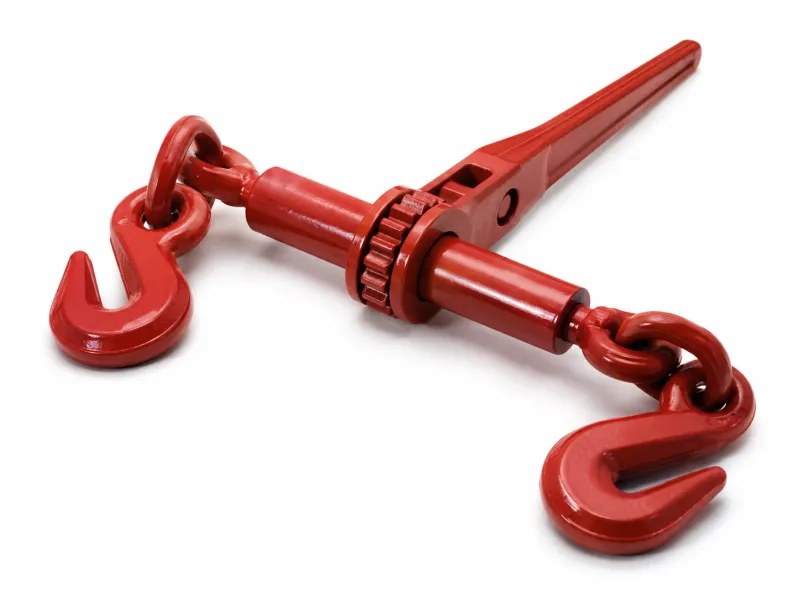
Industrial Steel Load Binder
Heavy-duty industrial ratchet load binder engineered for securing steel coils, machinery, and oversized freight. Features a drop-forged steel ratchet handle, hardened grab hooks, and a corrosion-resistant finish for demanding transport applications. Delivers reliable tensioning, EN 12195-2 and DOT compliance, and a 3:1 safety factor for professional cargo control operations.
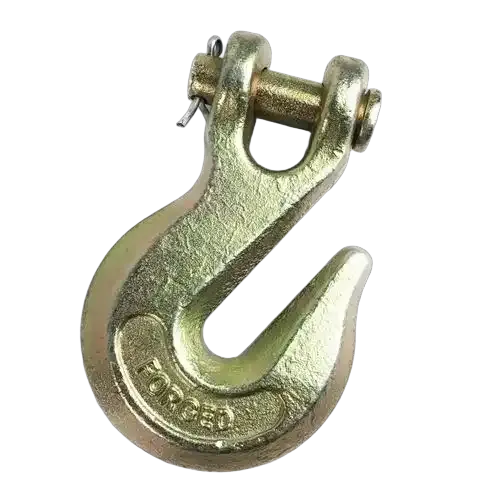
Forged End Hooks (S/F/J/Hooks)
TrustWebbing Forged End Hooks (S/F/J-Hooks) are drop-forged, heat-treated cargo control fittings engineered for 1"–4" tie-down and ratchet strap assemblies. Available as S-hooks, flat/snap hooks, and J-hooks with zinc or galvanized finishes, they deliver high breaking strength, corrosion resistance, and precise webbing-slot tolerances for OEM strap fabrication.
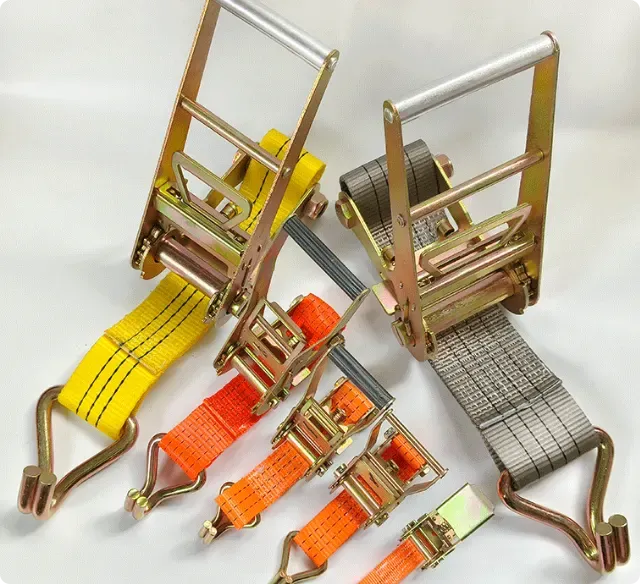
Heavy Duty Ratchet Buckle Assembly
Heavy Duty Ratchet Buckle Assembly engineered for 2-inch webbing, delivering a 3,335 lbs working load limit and 11,000 lbs breaking strength. Forged from zinc-plated, corrosion-resistant steel with an ergonomic wide-grip handle and double-locking pawl for secure, slip-free tensioning in demanding cargo control and transport applications.
Related Applications
Related Industries
Essential inspection checklist for heat-treated steel load binders — verify capacity, finish, and construction before bulk orders
Request a Load Binder Inspection Guide & Quote