
Selecting the right tie down anchor determines whether a load stays put or shifts during transit. As of 2026, the trucking and logistics industry relies on three primary anchor styles: D-rings, J-hooks, and E-Track channels, each suited to different bed configurations and load types. We work with fleet operators and hardware distributors across North America and Europe who need to match anchor style to mounting surface, corrosion exposure, and working load limit (WLL). Below, we break down the category by mounting method, material, and load capacity so you can specify the correct anchor before your next install or bulk order.
The Core Problem: Why Anchor Type Matters
Why Generic Anchors Fail in the Field
A mismatched anchor is one of the most common causes of load shift complaints we see from trucking and logistics customers. Bolt-on rings rated for 1,500 lbs are frequently used on flatbeds hauling 3,000+ lbs loads, which overloads the fastener rather than the webbing. Compared to a properly rated E-Track channel, an undersized bolt-on D-ring can fail at roughly half the load before the strap itself is stressed.
- Corrosion from road salt degrades unplated steel anchors within a single winter season
- Weld-on anchors installed without back-plating can tear through 14-gauge bed sheet metal under shock loading
- Mixed anchor types on one bed (some bolt-on, some channel) create inconsistent WLL across tie-down points
Understanding anchor construction — not just appearance — is the first step to correct specification.
D-Ring, J-Hook, and E-Track: The Three Main Types
Anchor Types by Mounting Method
Our
line covers three mounting configurations, each with distinct install and load characteristics:
| Anchor Type | Mounting Method | Material | Best Use Case |
| D-Ring | Bolt-on / Weld-on | Zinc Plated Steel | Flatbeds, trailers, permanent points |
| J-Hook | Bolt-on / Channel | Zinc Plated Steel / Aluminum | Quick-attach, removable rigging |
| E-Track | Channel (recessed) | Zinc Plated Steel | Enclosed trailers, adjustable spacing |
- D-rings sit flush or protrude slightly and are typically bolted through the bed rail or welded to a frame member for permanent installation
- J-hooks offer a curved profile that speeds up strap attachment without threading a ratchet end through a closed loop
- E-Track channels allow anchors to slide and lock at multiple points along the rail, which our
is designed to work with directly, rated at 1,600 lbs lift / 3,333 lbs drag WLL
Unlike a fixed D-ring, an E-Track system lets you reposition anchor points to match irregular cargo without redrilling the bed.
Material and Corrosion Resistance Considerations
Material Selection Drives Service Life
Our
are offered in zinc plated steel and aluminum, and the choice affects both load capacity and corrosion resistance:
- Zinc plated steel anchors offer higher tensile strength per unit size and are the standard choice for high-load applications like flatbed trucking
- Aluminum anchors weigh roughly a third less and resist rust entirely, making them suited to marine and coastal fleets, though they generally carry a lower WLL than a comparably sized steel unit
- For saltwater-exposed operations, our QC team recommends pairing anchors with corrosion-resistant hardware such as the
, built with 316 stainless hardware to MIL-Spec and WSTDA compliance
Compared to unplated mild steel, zinc plating extends usable anchor life significantly under repeated wet/dry cycling — a factor we check during every incoming QC batch.
Matching Anchors to Load and Strap Hardware
Pairing Anchors with the Right Strap System
An anchor is only as strong as the strap and end fitting connected to it. As current industry standard practice, we recommend matching anchor WLL to the strap assembly's rated capacity rather than the webbing's break strength alone:
- Our
is rated 3,333–6,667 lbs WLL with a 10,000–20,000 lbs break strength, and pairs well with bolt-on or weld-on D-rings rated to match
- For channel-mounted setups, the
includes a 360° swivel end that reduces webbing twist at the anchor point over a fixed hook
- End fittings such as
are sized for 1.5" to 3" webbing and should be checked against your anchor's throat opening before ordering
We prep bulk anchor and strap kits together for fleet accounts weekly to ensure the WLL of every component in the chain is consistent, since a single undersized link in the system — anchor, hook, or webbing — sets the real-world load limit.
Installation: Bolt-On, Weld-On, and Channel Systems
How Each Mounting Method Is Installed
Installation method affects both anchor strength and how easily it can be relocated or replaced:
| Mounting Method | Install Difficulty | Reversible? | Typical Load Path |
| Bolt-on | Low – drill and bolt | Yes | Through-bolt into bed rail |
| Weld-on | High – requires welding | No | Fused to frame member |
| Channel (E-Track) | Medium – track install once | Yes (anchor slides) | Distributed along track |
- Bolt-on anchors are the fastest to retrofit onto an existing bed and are our most-ordered configuration for aftermarket installs
- Weld-on anchors provide the highest single-point load path since force transfers directly into the frame, but they are permanent and require a back-plate on sheet-metal beds thinner than 14-gauge
- Channel systems trade single-point strength for flexibility, letting one E-Track rail serve multiple load configurations without added hardware
Compared to weld-on installation, bolt-on and channel systems can typically be swapped or upgraded without cutting into the bed structure, which matters for leased or resale vehicles.
Frequently Asked Questions
What are the main types of truck bed tie down anchors?
The three primary types are D-rings, J-hooks, and E-Track channel anchors. D-rings and J-hooks are typically bolt-on or weld-on fixed points, while E-Track uses a recessed channel that allows anchors to slide and lock at multiple positions along the rail.
Should I choose bolt-on or weld-on anchors?
Bolt-on anchors are easier to install and can be relocated or upgraded later, making them the more common choice for aftermarket retrofits. Weld-on anchors provide a more direct load path into the frame but are permanent and require adequate bed gauge or back-plating to avoid tearing sheet metal.
What material should truck bed anchors be made of?
Zinc plated steel is the standard for high-load applications due to its strength-to-size ratio. Aluminum anchors are lighter and fully corrosion-resistant, making them a better fit for marine or coastal fleets, though they generally carry a lower WLL than comparably sized steel anchors.
How does E-Track differ from a fixed D-ring anchor?
A fixed D-ring occupies one permanent location on the bed, while an E-Track channel lets anchors slide and lock along the rail, so tie-down points can be repositioned for different cargo without additional drilling. Our E-Track Ratchet Strap Assembly is rated at 1,600 lbs lift and 3,333 lbs drag WLL for use with these channel systems.
Do I need to match anchor WLL to my strap's rating?
Yes. The lowest-rated component in the chain — anchor, end hook, or webbing — sets the real-world working load limit for the entire tie-down assembly. Always confirm anchor WLL against your strap and hardware specifications before loading.
Related Resources
Related Products (4)
Truck Bed Tie-Down Anchors
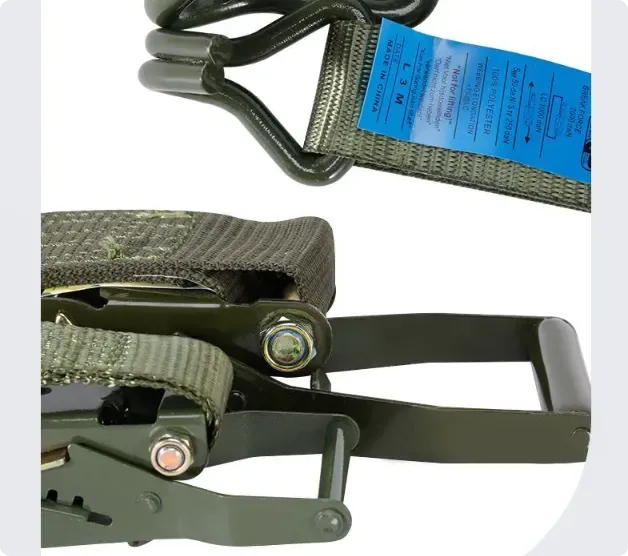
Heavy-duty truck bed tie-down anchor points engineered for pickup beds, flatbeds, and utility trailers. Zinc-plated forged steel construction delivers corrosion resistance and a 3,300 lbs breaking strength. Bolt-on or weld-on mounting, recessed low-profile design, and OEM customization make these ideal for wholesale distributors and cargo control fabricators.
E-Track Ratchet Strap Assembly
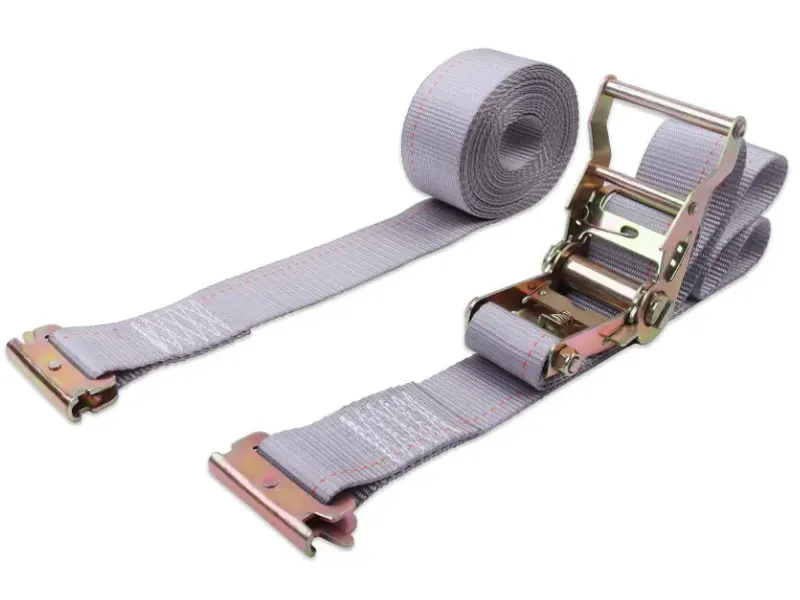
Heavy-duty 2-inch E-Track ratchet strap assembly with spring-loaded E-fittings for fast, secure cargo lock-down in enclosed trailers, vans, and warehouses. Features abrasion-resistant polyester webbing, a corrosion-treated ratchet handle, and a 3:1 safety factor. Ideal for logistics fleets, moving companies, and OEM buyers requiring reliable, standards-compliant tie-down hardware.
Standard Heavy Duty Ratchet Strap
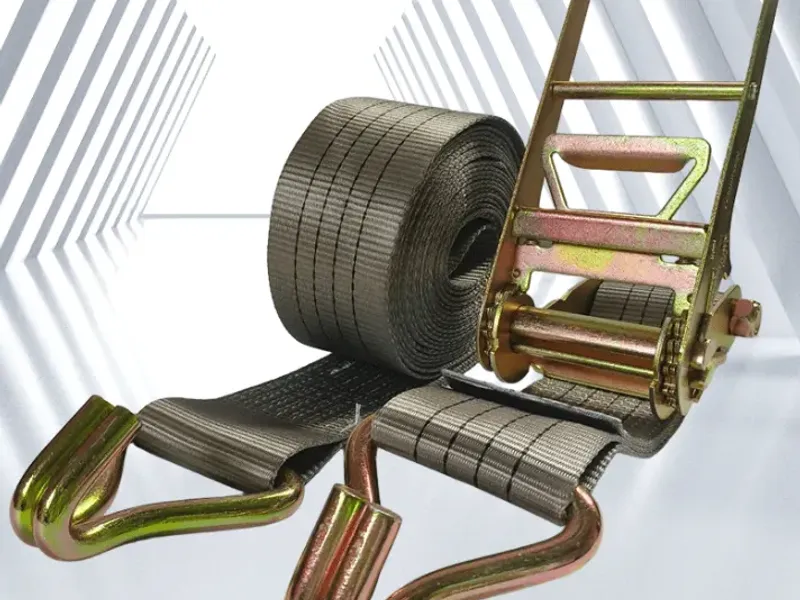
Standard Heavy Duty Ratchet Strap with 2" polyester webbing and forged wire hooks, delivering a 10,000 lbs breaking strength and 3,333 lbs working load limit. Engineered for reliable cargo securement on flatbeds, trailers, and pickups, it offers corrosion-resistant hardware, low-stretch webbing, and a smooth-action ratchet for repeatable, safe tie-downs.
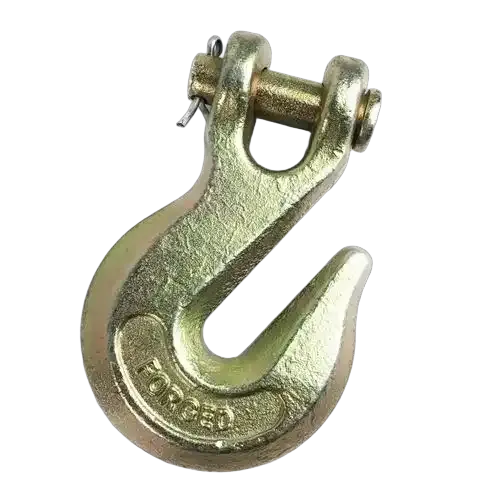
Forged End Hooks (S/F/J/Hooks)
TrustWebbing Forged End Hooks (S/F/J-Hooks) are drop-forged, heat-treated cargo control fittings engineered for 1"–4" tie-down and ratchet strap assemblies. Available as S-hooks, flat/snap hooks, and J-hooks with zinc or galvanized finishes, they deliver high breaking strength, corrosion resistance, and precise webbing-slot tolerances for OEM strap fabrication.
Related Applications
A practical breakdown of D-rings, J-hooks, and E-Track systems for secure cargo transport
Request Truck Bed Anchor Specifications