

Choosing the wrong cargo securement product is one of the most common — and costly — mistakes in trucking and logistics. An undersized ratchet strap or the wrong anchor point doesn't just risk a roadside citation; it risks the load itself. As of 2026, FMCSA cargo securement standards still hinge on one core rule: total working load limit (WLL) of your tiedowns must equal at least half the cargo's weight. Beyond that baseline, the right choice depends on trailer type, cargo shape, environment, and how often you're loading and unloading. This guide walks through how to match ratchet straps, chain and binders, E-Track systems, and anchor hardware to real-world trucking and logistics applications, with the specs you need to compare before ordering.
The Problem: Mismatched Securement Equipment Causes Load Failures
Why generic straps fail on real trucking loads
Fleet operators frequently default to whatever strap is on the truck, without checking working load limit (WLL) against actual cargo weight. FMCSA requires the combined WLL of all tiedowns to reach at least 50% of cargo weight, and article length dictates a minimum tiedown count of 1 per 10 feet, with 2 minimum regardless of length. Compared to guessing strap count on the fly, calculating WLL and tiedown count before dispatch reduces re-securement stops and citation risk.
We see three recurring gaps when reviewing fleet tie-down setups: undersized webbing width for the load class, zinc-plated hardware used on coastal or winter salt routes where corrosion sets in within a season, and mismatched anchor types (E-Track hardware bolted into a non-E-Track rail). Each of these is solvable by matching the product spec sheet to the route and cargo type before purchase, not after a failed roadside inspection.
Matching Strap Type to Load Weight and Trailer Setup
Comparing ratchet strap options by WLL and hardware
Straps are not interchangeable across load classes. Compared to a fixed-length strap, a Retractable Ratchet Strap System with a spring-loaded mandrel and 12 ft to 40 ft length options speeds up daily loading cycles because there's no loose webbing to coil and store — but it still needs to be matched to the same WLL math as any fixed strap.
Reference table for common trucking strap classes:
Note that Standard Utility & Tarp Straps are rated for tarps and light utility use, not cargo securement of freight — using a cam-buckle utility strap on a load that requires a rated ratchet strap is a common and preventable spec mismatch.
Chain, Load Binders, and When Webbing Isn't Enough
Choosing between webbing straps and chain + binder systems
For steel, pipe, machinery, or any cargo with sharp edges that could abrade webbing, chain paired with a load binder is the standard approach rather than a polyester strap. An Industrial Steel Load Binder rated 10 Ton to 25 Ton with a 3:1 safety factor is available in lever type or hook-and-handle style; lever binders give finer tension control on the road, while hook-and-handle binders are faster to release at the dock.
Compared to webbing, chain systems typically add setup time per load but hold tension better under vibration on rough routes, and won't cut through on sharp-edged cargo the way an unprotected strap can. As a rule of thumb: if your load has exposed metal edges or exceeds the practical WLL range of heavy-duty webbing (above roughly 6667 lbs per strap), move to chain and binders rather than stacking more straps.
Anchor Points, End Fittings, and Hardware Compatibility
Getting anchor and end-fitting hardware right
Straps are only as strong as the anchor point and end fitting they connect to. Truck Bed Tie-Down Anchors come in D-ring, J-hook, and E-Track styles with bolt-on, weld-on, or channel mounting — bolt-on is retrofit-friendly on existing decks, while weld-on anchors handle higher repeated stress on dedicated flatbed decks.
Match end fittings to your strap and anchor combination:
- Forged End Hooks (S/F/J/Hooks): forged steel, sized for 1.5" to 3" webbing, compatible with most flatbed rail and stake pocket anchors
- Steel Eyelet End Fittings: crimped or riveted, pull strength matched to webbing WLL, common for lashing and towing applications
- Heavy Duty Ratchet Buckle Assembly: heat-treated carbon steel with double-action pawl mechanism, sized for 1.5", 2", or 3" webbing widths
As a working practice, we check that end-fitting pull strength always matches or exceeds webbing WLL before pairing components — a mismatched hook or eyelet becomes the weakest point in the whole system, regardless of how strong the strap itself is rated.
A Practical Selection Checklist for Fleet Buyers
How to select cargo securement products step by step
1. Calculate cargo weight and confirm required aggregate WLL (minimum 50% of cargo weight per FMCSA)
2. Determine minimum tiedown count: 1 per 10 ft of cargo length, 2 minimum
3. Check cargo edges and surface — sharp/abrasive edges point to chain and load binders over webbing
4. Confirm trailer anchor type (E-Track rail, stake pockets, D-rings) before selecting strap end fittings
5. Factor in route environment — coastal, winter-salted, or marine-adjacent routes call for corrosion-resistant hardware like 316 stainless
For fleets sourcing in volume, we supply bulk and wholesale quantities of ratchet straps, load binders, and anchor hardware, serving trucking and logistics operations across North America and Europe as of 2026. Export-quality construction and consistent batch QC checks are standard on every order, whether it's a single trailer refit or a multi-truck fleet upgrade.
Frequently Asked Questions
What working load limit (WLL) do I need for trucking cargo securement?
Under FMCSA rules, the aggregate WLL of your tiedowns must equal at least half the cargo weight. For most flatbed loads, a Standard Heavy Duty Ratchet Strap rated 3333 lbs to 6667 lbs WLL, used in sets of 4 or more, covers loads up to roughly 40,000 lbs. Heavier or irregular loads may require chain and load binder combinations instead of webbing straps.
Should I use E-track straps or bolt-on anchors for my trailer?
E-Track systems offer repositionable anchor points along a rail, which is useful when load sizes vary shipment to shipment. Bolt-on Truck Bed Tie-Down Anchors are fixed but generally handle higher point loads. If your trailer already has E-Track rail installed, an E-Track Ratchet Strap Assembly with 360° swivel and 1600 lbs lift / 3333 lbs drag WLL is the faster-to-deploy option.
When should I use a load binder instead of a ratchet strap?
Load binders are paired with chain, not webbing, and are used when cargo weight, sharp edges, or high-abrasion contact points exceed what polyester webbing can safely handle. An Industrial Steel Load Binder rated 10 Ton to 25 Ton with a 3:1 safety factor is typical for flatbed steel, pipe, or machinery loads where chain is the required securement method.
Do marine or corrosive environments require different hardware?
Yes. Standard zinc-plated carbon steel hardware corrodes faster in saltwater or coastal freight lanes. For marine and shipping-adjacent trucking routes, a 316 Marine Grade Ratchet Strap with 316 stainless steel hardware and UV-resistant black polyester webbing rated 1600 lbs to 3333 lbs WLL holds up significantly longer than standard zinc-plated straps in that environment.
How many straps or tiedowns does a single load need?
Federal cargo securement standards require a minimum of one tiedown per 10 feet of cargo length, with at least 2 tiedowns for any article regardless of length. Longer or unstable loads typically need 4 to 6 straps to meet the half-weight WLL rule. Always round up when article length falls near a threshold rather than rounding down.
Related Resources
Related Products (4)
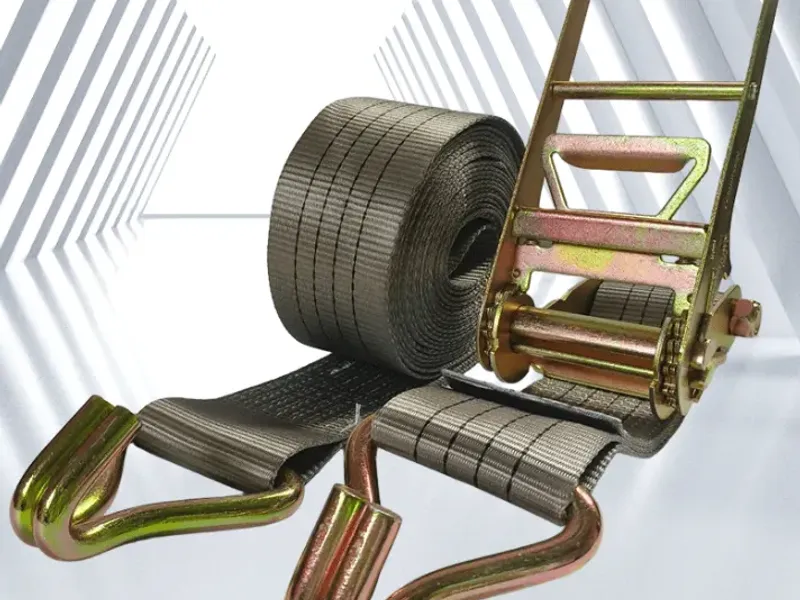
Standard Heavy Duty Ratchet Strap
Standard Heavy Duty Ratchet Strap with 2" polyester webbing and forged wire hooks, delivering a 10,000 lbs breaking strength and 3,333 lbs working load limit. Engineered for reliable cargo securement on flatbeds, trailers, and pickups, it offers corrosion-resistant hardware, low-stretch webbing, and a smooth-action ratchet for repeatable, safe tie-downs.
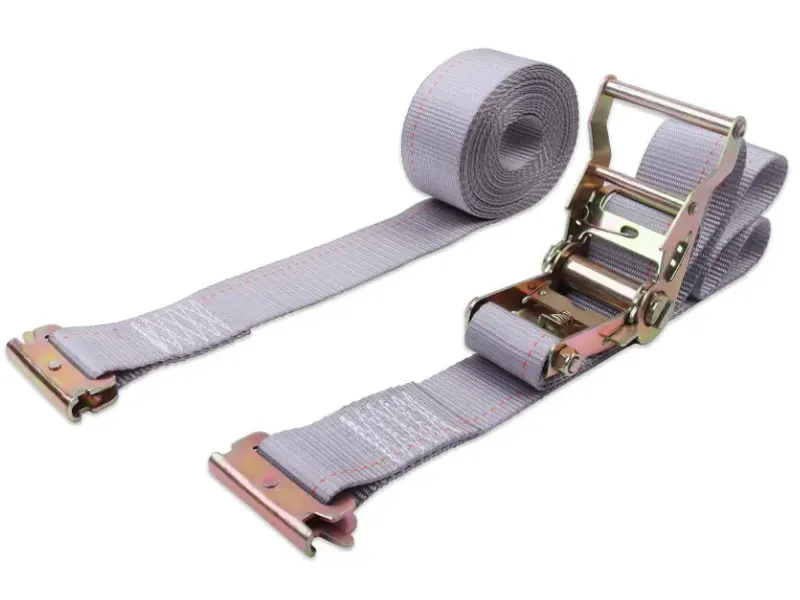
E-Track Ratchet Strap Assembly
Heavy-duty 2-inch E-Track ratchet strap assembly with spring-loaded E-fittings for fast, secure cargo lock-down in enclosed trailers, vans, and warehouses. Features abrasion-resistant polyester webbing, a corrosion-treated ratchet handle, and a 3:1 safety factor. Ideal for logistics fleets, moving companies, and OEM buyers requiring reliable, standards-compliant tie-down hardware.
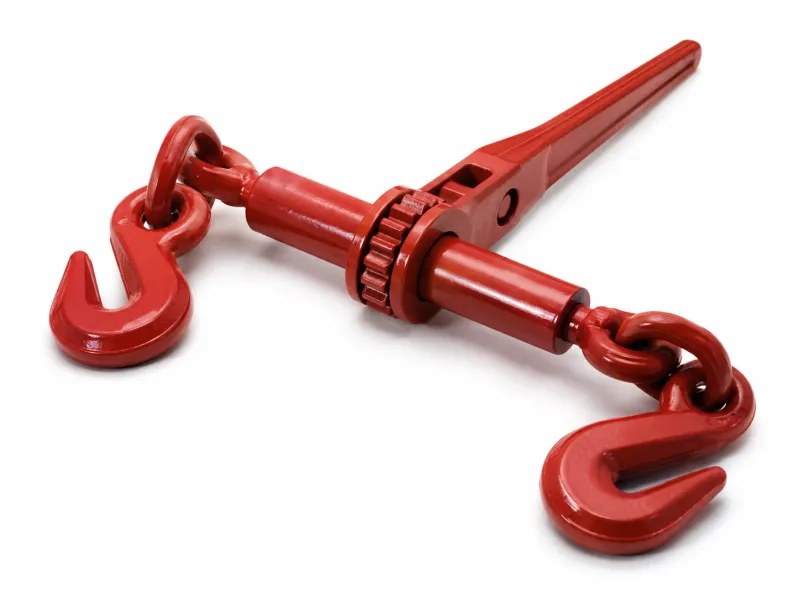
Industrial Steel Load Binder
Heavy-duty industrial ratchet load binder engineered for securing steel coils, machinery, and oversized freight. Features a drop-forged steel ratchet handle, hardened grab hooks, and a corrosion-resistant finish for demanding transport applications. Delivers reliable tensioning, EN 12195-2 and DOT compliance, and a 3:1 safety factor for professional cargo control operations.
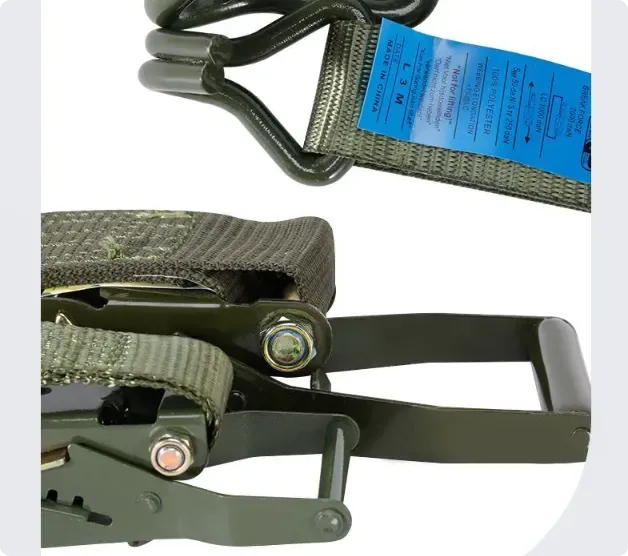
Truck Bed Tie-Down Anchors
Heavy-duty truck bed tie-down anchor points engineered for pickup beds, flatbeds, and utility trailers. Zinc-plated forged steel construction delivers corrosion resistance and a 3,300 lbs breaking strength. Bolt-on or weld-on mounting, recessed low-profile design, and OEM customization make these ideal for wholesale distributors and cargo control fabricators.
Related Applications
A spec-based buyer's guide to ratchet straps, load binders, and anchor hardware for trucking
Request a Cargo Securement Product Quote