For global distributors and private-label brands, the true cost of industrial webbing isn't just the factory price per meter. It involves freight, tariffs, packaging requirements, and the minimum order quantities (MOQs) set by weaving capacity.
This guide helps procurement managers calculate the true 'Landed Cost' when sourcing from China. We discuss how to negotiate tiered pricing, how to structure mixed-container orders to maximize space, and why factory-direct relationships bypass costly middlemen.
Optimizing Container Loadouts
Industrial webbing is voluminous. By choosing the correct webbing width (e.g., 1.5" vs 2") and bundling straps efficiently, you can significantly increase your CBM (Cubic Meter) utilization, reducing the per-unit shipping cost.
Key Cost Drivers in OEM Webbing
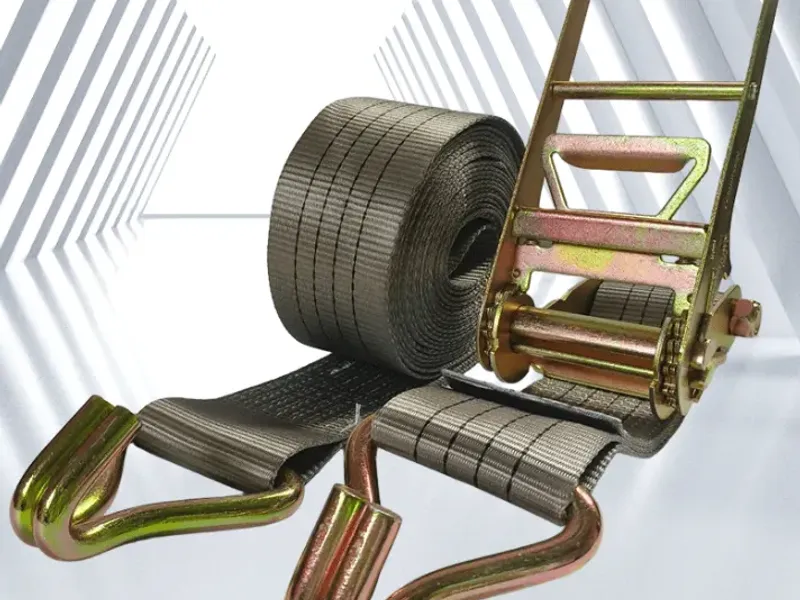
OEM webbing pricing is driven by several measurable factors. Raw material type and weave density are paramount: standard 1000D polyester webbing, like that in the High-Performance Industrial Webbing Roll, is cost-effective for widths from 1 inch to 4 inches, but upgrading to UV-resistant or marine-grade polymers for a 316 Marine Grade Ratchet Strap can increase material cost by 15–25%. Width directly impacts price—moving from 1 inch to 2 inches can nearly double the per-foot cost due to higher yarn consumption. For instance, a 2-inch Double Eye Polyester Webbing with a 40,000 lb WLL requires significantly more fiber than its 1-inch, 1,500 lb counterpart. Tensile strength and safety certifications are also critical: webbing certified to WSTDA standards, such as the Industrial Steel Load Binder with a 3:1 safety factor, undergoes rigorous testing that adds 5–10% to baseline costs but ensures compliance and reduces liability.
Volume Discounts and Minimum Order Quantities
Negotiating OEM pricing heavily depends on order volume and MOQs. Typical MOQs for custom webbing range from 500 to 1,000 units per SKU, but consolidating orders across multiple widths or products can unlock tiered discounts. For a Standard Heavy Duty Ratchet Strap in 2-inch width with a 6,667 lb WLL, an order of 2,000 units can reduce per-unit cost by approximately 20–30% compared to a 500-unit order. Buyers should also consider annual volume commitments: suppliers often provide 5–10% additional discounts for contracts exceeding 10,000 units annually. In contrast, smaller orders for niche products like the 316 Marine Grade Ratchet Strap, with its specialized 316 stainless hardware, may carry higher per-unit costs but lower MOQs due to lower overall demand, making it essential to balance standard and specialty items in your procurement strategy.
Customization and Its Impact on Cost and Lead Time
Customizations—from non-standard widths and colors to unique end fittings—significantly influence both pricing and delivery schedules. A Forged End Hook in a zinc-plated S-hook configuration for 2-inch webbing typically adds $0.30–$0.50 per unit, but upgrading to a custom safety hook with a yellow chromate finish can double that cost. Widths outside the standard 1–3 inch range, such as a 25mm narrow webbing for regulatory markets, often require a setup fee of $200–$500 and a minimum order of 1,000 meters. Lead times for standard OEM products like the General Purpose Woven Webbing are around 15–20 days; custom orders can extend to 30–45 days, and rush orders under 10 days may incur a 15–25% surcharge. Incorporating retractable mechanisms, as in the Retractable Ratchet Strap System, adds complexity, with auto-retract mandrel costs raising unit pricing by 30% versus a fixed-end system.
Certifications and Compliance: Balancing Cost with Performance
Certifications are non-negotiable for many industries, but they come with a quantifiable cost. Webbing that meets WSTDA, ISO 9001, or MIL-Spec standards, such as the High-Performance Industrial Webbing Roll, requires documented batch testing that can add 8–12% to the raw material cost. For lifting applications, a Double Eye Polyester Webbing with a 10,000 lb WLL must have a break strength of at least 30,000 lb under the common 3:1 safety factor, driving material and construction expenses. In the marine sector, the 316 Marine Grade Ratchet Strap must pass 500-hour salt spray tests to verify corrosion resistance, increasing hardware costs by 20% versus standard zinc-plated options. However, non-certified alternatives might save 10–15% upfront but risk load failure, making it crucial to include compliance costs in your total-cost-of-ownership analysis.
Market Trends and Benchmarking for Better Deals
Understanding current market trends helps buyers secure competitive pricing. The global polyester webbing market saw raw material prices fluctuate by 8% in 2024, with 1000D polyester yarn costs directly impacting products like the Standard Heavy Duty Ratchet Strap. Benchmarking reveals that a basic 2-inch, 6,667 lb WLL ratchet strap from a domestic OEM might cost $4–$6 per unit, while an equivalent overseas supplier, factoring in 20–30% logistics overhead, lands at $3.50–$5.00—highlighting the importance of total landed cost. High-strength specialized webbing, such as the Woven Polyester Lifting Sling with a 12-inch width and 20,000 lb capacity, commands a premium 25–30% over standard 2-inch slings due to its specialized construction, but bulk orders of 500+ units can narrow that gap to under 15%. Stay informed on commodity indices and request quarterly price reviews to align your negotiations with market reality.