
Basket lifting slings are essential rigging solutions for industrial lifting applications where load stability and balanced weight distribution are critical. Unlike single-leg configurations, basket slings wrap around the load, doubling the effective working load limit while maintaining control during lifts. Our woven polyester lifting slings are manufactured to WSTDA and ISO 9001 standards, available in widths from 2 to 12 inches with working load limits ranging from 1,500 to 20,000 lbs. As of 2026, basket configuration remains the industry standard for heavy, sensitive, or irregularly shaped loads across construction, manufacturing, and logistics operations.
What Are Basket Lifting Slings?
Basket lifting slings are configured by passing the sling loop through itself, creating two vertical legs that support the load from opposite sides. This arrangement distributes weight evenly across both legs, effectively doubling the working load limit compared to a single-leg vertical hitch. The basket configuration is particularly effective for lifting long, unstable, or delicate loads that require balanced support.
Compared to choker hitch configurations, basket slings provide superior load stability without constricting the load. While a choker hitch reduces the working load limit by approximately 20% due to the bending stress at the choke point, a basket sling maintains full capacity when used at proper angles. This makes basket lifting slings the preferred choice for precision lifting operations in Construction & Infrastructure and Logistics & Transportation sectors.
Key Features & Specifications
Our Woven Polyester Lifting Sling is engineered for demanding industrial applications. The industrially woven polyester construction provides excellent strength-to-weight ratio, chemical resistance, and minimal stretch under load.
Available Specifications
- Material: Industrially woven polyester
- Width Range: 2 inch to 12 inch
- Working Load Limit: 1,500 lbs to 20,000 lbs
- Configurations: Single Eye / Double Eye / Basket
- Certification: WSTDA / ISO 9001 compliant
| Width | WLL (Vertical) | WLL (Basket @ 60°) | WLL (Basket @ 45°) |
| 2 inch | 1,500 lbs | 2,600 lbs | 2,100 lbs |
| 3 inch | 2,800 lbs | 4,900 lbs | 3,950 lbs |
| 4 inch | 4,200 lbs | 7,300 lbs | 5,900 lbs |
| 6 inch | 7,500 lbs | 13,000 lbs | 10,500 lbs |
| 8 inch | 11,000 lbs | 19,000 lbs | 15,500 lbs |
| 10 inch | 15,000 lbs | 26,000 lbs | 21,000 lbs |
| 12 inch | 20,000 lbs | 34,600 lbs | 28,200 lbs |
The basket configuration allows the sling to cradle the load securely, reducing the risk of slippage compared to single-leg setups. Unlike steel chain slings, polyester basket slings are lightweight, flexible, and won't damage sensitive load surfaces. They also absorb shock loads better than synthetic roundslings, making them suitable for Lifting & Rigging operations where load control is paramount.
How Basket Configuration Works
The basket hitch works by forming a U-shaped loop around the load, with both legs of the sling attached to the lifting point. The angle between the sling legs and the horizontal plane directly affects the working load limit. As the angle decreases (legs become more horizontal), the tension on each leg increases significantly.
Angle Factor Reference
| Angle from Horizontal | Angle Factor | Effective WLL Multiplier |
| 90° (Vertical) | 2.00 | 2x single leg capacity |
| 60° | 1.73 | 1.73x single leg capacity |
| 45° | 1.41 | 1.41x single leg capacity |
| 30° | 1.00 | 1x single leg capacity |
| 15° | 0.52 | 0.52x single leg capacity |
For safe operation, the angle between sling legs should never be less than 30° from horizontal. At angles below this threshold, the tension on each leg exceeds the rated capacity, creating a serious safety hazard. Proper sling length selection and load attachment point positioning are essential to maintaining safe angles during every lift operation.
When comparing basket slings to other configurations, the choker hitch reduces capacity by approximately 20% due to the bending stress created when the sling is tightened around the load. In contrast, a properly rigged basket sling at 60° maintains 87% of the combined vertical capacity of both legs, making it the more efficient configuration for most heavy-lift applications.
Applications & Industries
Basket lifting slings are versatile rigging solutions used across multiple industries where load stability and surface protection are priorities.
Primary Applications
- Construction & Infrastructure: Lifting prefabricated concrete panels, steel beams, and construction materials
- Manufacturing: Moving machinery, equipment, and raw materials within facilities
- Logistics & Transportation: Loading and unloading cargo from trucks, ships, and railcars
- Oil, Gas & Energy: Rigging operations in upstream and downstream energy facilities
- Renewable Energy: Lifting wind turbine components and solar panel arrays
Unlike Standard Heavy Duty Ratchet Straps used for cargo securement, basket lifting slings are designed specifically for overhead lifting operations. The Woven Polyester Lifting Sling in basket configuration provides the smooth, non-abrasive contact surface needed to protect finished goods, painted surfaces, and delicate materials during lifts.
For marine environments, our polyester construction offers superior corrosion resistance compared to steel alternatives. While 316 Marine Grade Ratchet Straps are optimized for cargo tie-down in saltwater conditions, basket lifting slings serve the Marine & Shipping industry with reliable overhead lifting capability that won't rust or degrade in humid conditions.
Selection & Best Practices
Selecting the correct basket lifting sling requires careful consideration of load weight, dimensions, center of gravity, and lifting angle. Our Double Eye Polyester Webbing can be configured as a basket sling by passing one eye through the other, providing a customizable solution for unique lifting requirements.
Selection Guidelines
- Calculate total load weight and add a 25% safety margin for dynamic loading
- Determine sling angle based on load dimensions and attachment point height
- Select width based on required WLL and load surface sensitivity
- Verify configuration matches your lifting hardware (shackles, hooks, etc.)
- Inspect before each use for cuts, abrasion, or chemical damage
Our High-Performance Industrial Webbing Roll is available in 1000D high-tensile polyester with widths from 1 to 4 inches, suitable for custom basket sling fabrication. The high-density weave construction provides exceptional durability and resistance to UV degradation, making it ideal for outdoor Lifting & Rigging applications exposed to sunlight.
When comparing our basket lifting slings to Steel Eyelet End Fittings or Forged End Hooks, the polyester webbing offers significant advantages in weight reduction and handling comfort. While metal fittings provide maximum durability for harsh environments, polyester slings reduce operator fatigue during repetitive lifting operations and eliminate the risk of load surface marring.
Frequently Asked Questions
What is the difference between basket and choker hitch configurations?
A basket hitch wraps around the load without constricting it, maintaining the full working load limit multiplied by the angle factor. A choker hitch passes one end through the other and tightens around the load, which reduces capacity by approximately 20% due to bending stress at the choke point. Basket configurations provide better load stability for long or irregular shapes, while choker hitches are better suited for loads that need to be secured or vertical lifting of compact items.
How do I calculate the working load limit for a basket sling?
The basket WLL is calculated by multiplying the single-leg vertical WLL by the angle factor. For example, a 4-inch sling rated at 4,200 lbs vertical has a basket WLL of 7,300 lbs at 60° (4,200 × 1.73). Always ensure the angle between sling legs is at least 30° from horizontal, and never exceed the rated capacity at any angle. Consult the angle factor table for precise calculations.
What inspection intervals are recommended for basket lifting slings?
Basket lifting slings should be inspected before each use by the operator and at regular intervals by a competent person. Daily inspections should check for cuts, abrasion, chemical damage, UV degradation, and damaged stitching. Formal inspections should occur at least annually or per manufacturer recommendations. Any sling showing signs of wear, discoloration, or distortion should be removed from service immediately.
Can basket lifting slings be used for overhead lifting?
Yes, basket lifting slings are specifically designed for overhead lifting applications when used within their rated capacity and at proper angles. The Woven Polyester Lifting Sling in basket configuration is certified for overhead lifting and is commonly used in Construction & Infrastructure and Logistics & Transportation operations. Always use appropriate lifting hardware such as Industrial Safety Carabiners rated for the application.
How do polyester basket slings compare to nylon or polypropylene slings?
Polyester basket slings offer superior resistance to UV degradation and chemical exposure compared to nylon, with only 10-15% elongation under load versus 25-30% for nylon. Polypropylene slings are lighter and float on water but have lower melting points and reduced chemical resistance. For most industrial lifting applications, polyester provides the best balance of strength, durability, and environmental resistance, making it the preferred material for Lifting Slings & Webbing used in outdoor and harsh environments.
Related Resources
Related Products (3)
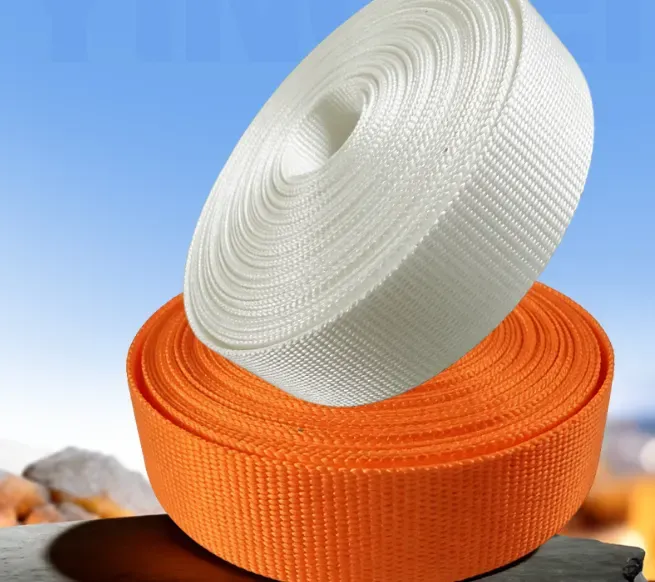
Woven Polyester Lifting Sling
Heavy-duty woven polyester flat lifting sling engineered for safe overhead rigging and load handling. Color-coded by working load limit with a 7:1 safety factor, abrasion-resistant edges, and reinforced eyes. Available in 1–10 tonne capacities, EN 1492-1 compliant, and fully customizable for OEM buyers seeking reliable, low-stretch soft slings at competitive wholesale pricing.
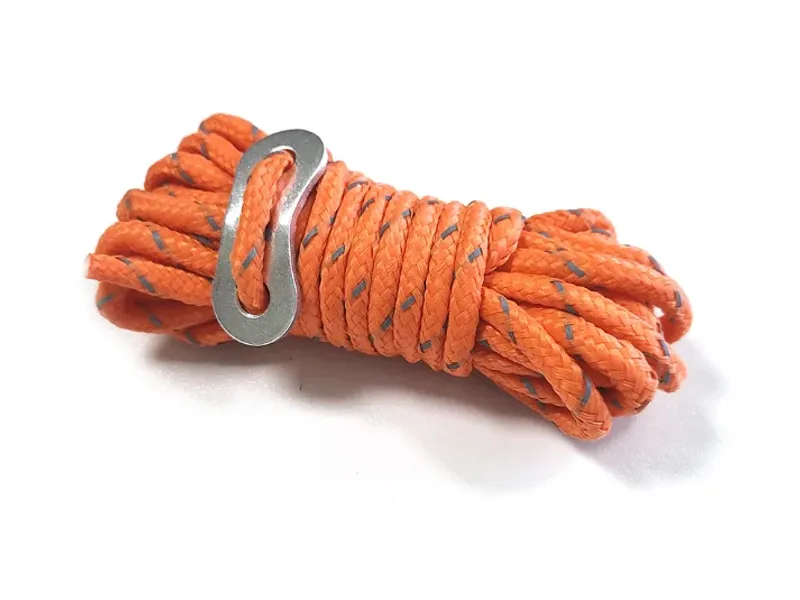
Double Eye Polyester Webbing
Double Eye Polyester Webbing sling with reinforced eye-to-eye loops for secure load lifting. Engineered from 100% high-tenacity polyester, it offers low stretch, superior abrasion resistance, and color-coded WLL identification. Ideal for rigging, construction, and industrial hoisting where flat, flexible slings protect delicate load surfaces.
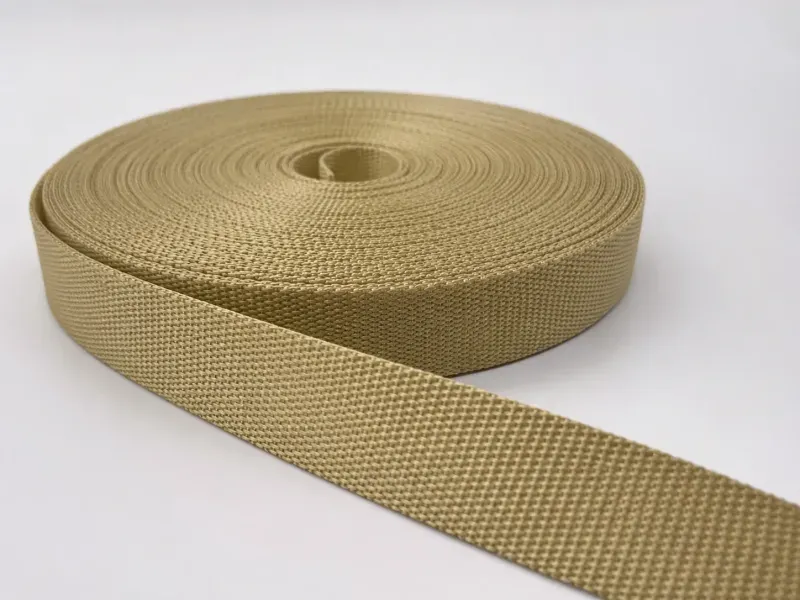
High-Performance Industrial Webbing Roll
High-strength 2-inch polyester industrial webbing roll engineered for cargo tie-downs, ratchet straps, and lifting slings. Delivers a 6,000 lb breaking strength with a 3:1 safety factor, superior abrasion and UV resistance, and low elongation. Ideal for OEM strap fabrication and heavy-duty load-securement applications requiring consistent, certified performance.
Related Categories
Related Applications
Related Industries
Woven polyester basket slings for secure, balanced load lifting — 1,500 to 20,000 lbs capacity
Request a Basket Lifting Sling Quote