

For small businesses in trucking, logistics, and construction, sourcing reliable load binder suppliers in bulk can significantly impact both operational efficiency and bottom-line costs. Whether you're outfitting a growing fleet, stocking a rental yard, or equipping contractor teams, bulk purchasing from an established supplier ensures consistent quality, predictable inventory, and better unit economics. As of 2026, the demand for heat-treated steel load binders with capacities ranging from 10 to 25 tons continues to rise globally, driven by stricter cargo securement regulations and expanding freight volumes across North America and international export markets.
Why Small Businesses Choose Bulk Load Binder Suppliers
Cost Efficiency and Inventory Control
Small businesses operating in
Cargo Securement & Transportation
face unique challenges: limited purchasing power compared to large fleets, yet the same need for professional-grade equipment. Buying load binders in bulk from dedicated suppliers addresses both concerns.
- Unit cost reduction: Bulk orders typically reduce per-unit costs by 15-30% compared to retail or small-lot purchases.
- Consistent stock: Maintain ready inventory for job sites, avoiding costly project delays due to equipment shortages.
- Supplier relationships: Establishing a relationship with a bulk supplier often unlocks priority order processing and flexible reorder terms.
- Quality assurance: Reputable suppliers provide batch testing and material certifications, ensuring every binder meets WSTDA and DOT cargo securement standards.
Compared to sourcing load binders from multiple distributors or hardware retailers, partnering with a single bulk supplier streamlines procurement, reduces administrative overhead, and ensures consistent product specifications across your entire inventory.
Load Binder Types and Specifications for Bulk Orders
Lever Type vs. Ratchet Type Load Binders
Our
line includes both lever-style and ratchet-handle designs, each suited to different operational contexts:
| Feature | Lever Type | Ratchet (Hook & Handle) Type |
| Operation Speed | Fast engagement, **2-3 seconds** per binder | Slower, incremental tensioning |
| Tensioning Control | Moderate, relies on operator leverage | Precise, ratchet pawl mechanism |
| Ideal Use Case | High-volume loading, flatbed trucking | Heavy equipment hauling, precise tension requirements |
| Capacity Range | 10 Ton – 25 Ton | 10 Ton – 25 Ton |
| Safety Factor | 3:1 (standard) | 3:1 (standard) |
Material and Finish Options
- Heat-treated steel: All load binders are forged from heat-treated carbon steel, ensuring high tensile strength and resistance to deformation under load.
- Finish: Yellow powder-coat (high visibility) or zinc-plated (corrosion resistance). Zinc-plated finishes extend service life in humid or marine environments by up to 40% compared to uncoated alternatives.
- Compliance: Manufactured to meet WSTDA T-4 and DOT FMCSA 393.110 cargo securement standards.
Bulk Order MOQ and Packaging
For small business accounts, we offer flexible minimum order quantities starting at 50 units per SKU. Binders are packaged in protective cartons (10 units per carton) to prevent shipping damage and simplify inventory handling. Mixed-capacity orders are accommodated to help businesses stock a range of load ratings without committing to large single-SKU volumes.
Selecting the Right Load Binder Supplier: Key Criteria
Quality Verification and Testing
When evaluating load binder suppliers in bulk for small business, prioritize suppliers who provide tangible evidence of quality control:
- Batch testing: We proof-test a sample from every production batch to 125% of rated WLL (Working Load Limit).
- Material traceability: Full material certifications (mill certificates) available upon request, documenting steel composition and heat-treatment parameters.
- Third-party audits: Our facility maintains ISO 9001:2015 certification, audited annually by independent bodies.
Unlike generic importers who offer no testing documentation, working with a supplier embedded in the
Logistics & Transportation
and
Construction & Infrastructure
industries ensures your equipment meets real-world operational standards.
Inventory Flexibility and Lead Times
Small businesses need suppliers who can scale with them:
- In-stock programs: We maintain rolling inventory of standard lever-type and ratchet-type binders in 10-ton, 15-ton, and 20-ton capacities.
- Custom runs: For unique finish requirements or private labeling, custom production runs start at 500 units with typical lead times of 6-8 weeks.
- Reorder efficiency: Established accounts can place restock orders as small as 25 units with expedited processing.
Geographic Reach and Logistics Support
Our distribution network serves North America, Europe, and export markets globally. For small businesses building multi-regional operations, we provide:
- Consolidated shipping: Combine load binders with complementary products like
Standard Heavy Duty Ratchet Straps
or
Forged End Hooks
to optimize freight costs.
- Drop-ship capability: Direct-to-job-site delivery for project-based orders, reducing your warehousing burden.
- Export documentation: Full commercial invoicing, packing lists, and country-specific compliance paperwork for international shipments.
Practical Applications: How Small Businesses Use Bulk Load Binders
Fleet Operators and Logistics Companies
Small to mid-sized trucking companies typically standardize on one or two load binder styles to simplify driver training and maintenance:
- Flatbed haulers: Equip each truck with 4-6 lever-type binders for securing steel coils, lumber bundles, or machinery. Bulk purchasing ensures every driver carries identical equipment, reducing confusion and improving load securement consistency.
- Heavy haul specialists: Use ratchet-type binders for oversized loads where precise tension adjustment prevents load shift. We've worked with regional heavy haul operators who reorder 100-200 binders annually to maintain fleet-wide standards.
Equipment Rental and Leasing Yards
Rental operations require durable, high-visibility equipment that withstands frequent handling:
- Turnover rates: Rental-grade load binders experience 3-5x more use cycles than owner-operator equipment. Our yellow powder-coat finish not only improves visibility but also simplifies inventory tracking.
- Replacement cycles: Proactive bulk purchasing allows rental yards to rotate out worn equipment before failure, maintaining customer satisfaction and safety compliance.
Construction and Contracting Firms
Contractors transporting heavy equipment, steel, or building materials rely on load binders daily:
- Site-to-site mobility: Small construction firms operating across multiple job sites maintain tool caches at each location. Bulk orders of 50-100 binders enable cost-effective distribution across project sites.
- Multi-trade coordination: General contractors bundling services (excavation, framing, mechanical) equip each trade crew with standardized securement gear, sourced through a single bulk supplier to ensure compatibility and shared spare parts.
Compared to ad-hoc purchasing, bulk procurement reduces per-job equipment costs by roughly 20-25%, directly improving project margins.
Maintenance, Safety, and Long-Term Value
Inspection and Maintenance Protocols
Load binders are subject to high mechanical stress and environmental exposure. We recommend establishing routine inspection procedures:
- Pre-trip inspections: Check for bent handles, worn hooks, or visible cracks. Any binder showing deformation should be removed from service immediately.
- Lubrication schedule: Apply light machine oil to pivot points and ratchet mechanisms every 30 days or after exposure to wet conditions. This extends operational life by up to 50%.
- Replacement triggers: Retire binders that show 10% or greater reduction in handle length due to wear, or any cracking in welds or hook throats.
Safety Factor and Regulatory Compliance
All our load binders maintain a 3:1 safety factor, meaning a 10-ton binder has a break strength of approximately 30 tons (60,000 lbs). This margin accounts for dynamic loading, temperature variations, and material aging.
As of 2026, FMCSA regulations (49 CFR 393.110) require cargo securement systems to withstand 0.8g forward deceleration. Properly rated load binders, used in conjunction with
or chain, meet this requirement when applied per manufacturer guidelines.
Total Cost of Ownership
When evaluating load binder suppliers in bulk for small business, consider lifecycle costs beyond initial purchase:
| Cost Factor | Bulk Supplier | Retail/Ad-hoc Purchasing |
| Unit Cost | **15-30% lower** | Baseline |
| Warranty Support | Batch-level replacement for defects | Limited or none |
| Training Resources | Application guides, securement best practices | Minimal |
| Inventory Predictability | Scheduled reorders, consistent specs | Variable availability |
| Administrative Overhead | Single PO, consolidated invoicing | Multiple vendors, reconciliation complexity |
For a small business operating 5-10 trucks and using approximately 200 load binders annually, bulk purchasing can reduce total securement equipment costs by $2,000-$4,000 per year while improving operational consistency.
Frequently Asked Questions
What is the minimum order quantity for bulk load binders as a small business?
Our standard MOQ for small business accounts is 50 units per SKU. This threshold balances meaningful per-unit cost savings with manageable inventory levels for growing operations. Mixed-capacity orders are accepted, so you can combine 10-ton, 15-ton, and 20-ton binders in a single purchase order to reach the 50-unit minimum across multiple SKUs. Established accounts with predictable reorder patterns may qualify for reduced MOQs as low as 25 units on restocks.
How do bulk load binder prices compare to retail or small-lot purchases?
Bulk purchasing typically reduces per-unit costs by 15-30% compared to retail hardware stores or small-lot distributor pricing. The exact discount depends on order volume, finish selection, and whether you opt for in-stock or custom production. For example, a 10-ton lever-type binder purchased individually might retail for a certain amount, while a 100-unit bulk order reduces the unit cost significantly. Volume discounts scale further at 200+ units and 500+ units, making bulk sourcing particularly attractive for fleet operators and rental yards with ongoing equipment needs.
What quality certifications and testing do your load binders undergo?
Every production batch of our Industrial Steel Load Binders undergoes proof testing to 125% of rated Working Load Limit before shipment. We provide full material certifications (mill certificates) documenting steel composition and heat-treatment parameters. Our manufacturing facility holds ISO 9001:2015 certification, audited annually. All binders are designed and tested to meet WSTDA T-4 standards and FMCSA 49 CFR 393.110 cargo securement regulations. Third-party test reports are available upon request for customers requiring additional documentation for safety audits or compliance verification.
Can I mix different load binder capacities in one bulk order?
Yes, mixed-capacity orders are standard practice for small business customers. You can combine 10-ton, 15-ton, 20-ton, and 25-ton capacities in a single purchase order, as long as the total unit count meets or exceeds the 50-unit MOQ. This flexibility allows you to stock a range of load ratings without committing to large single-SKU volumes, which is particularly useful for businesses serving diverse hauling applications or maintaining multi-site inventory across different operational contexts.
Do you offer private labeling or custom finishes for bulk orders?
Custom finishes and private labeling are available for orders of 500 units or more. This includes custom powder-coat colors (beyond our standard yellow and zinc-plated options), laser engraving or stamping with your company name or logo, and custom packaging with branded cartons. Typical lead time for custom production runs is 6-8 weeks from artwork approval and deposit. For businesses looking to build brand recognition in rental markets or differentiate their fleet equipment, private labeling transforms commodity load binders into branded assets while maintaining the same quality and performance standards as our stock products.
Related Resources
Related Products (3)
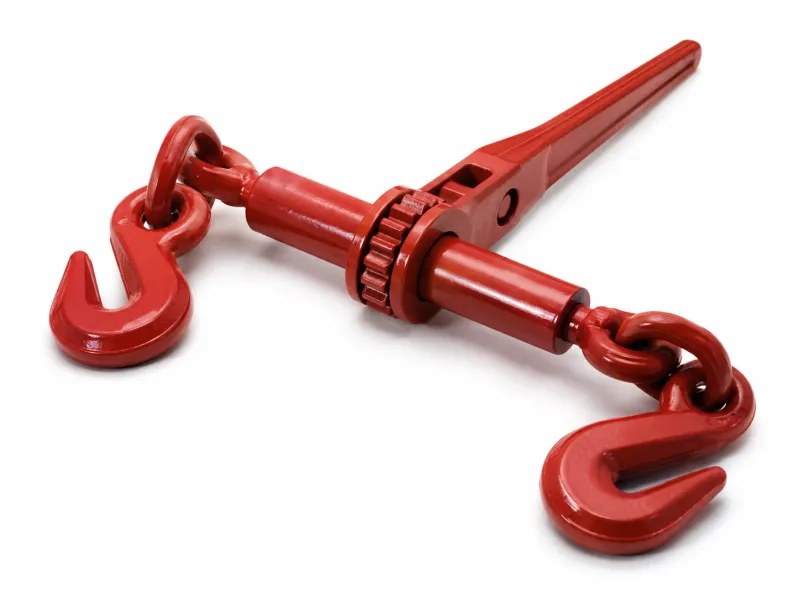
Industrial Steel Load Binder
Heavy-duty industrial ratchet load binder engineered for securing steel coils, machinery, and oversized freight. Features a drop-forged steel ratchet handle, hardened grab hooks, and a corrosion-resistant finish for demanding transport applications. Delivers reliable tensioning, EN 12195-2 and DOT compliance, and a 3:1 safety factor for professional cargo control operations.
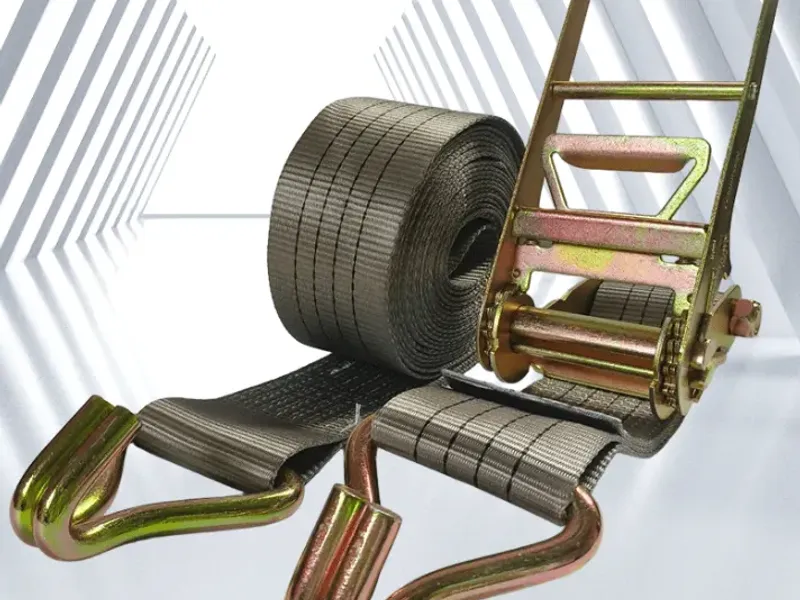
Standard Heavy Duty Ratchet Strap
Standard Heavy Duty Ratchet Strap with 2" polyester webbing and forged wire hooks, delivering a 10,000 lbs breaking strength and 3,333 lbs working load limit. Engineered for reliable cargo securement on flatbeds, trailers, and pickups, it offers corrosion-resistant hardware, low-stretch webbing, and a smooth-action ratchet for repeatable, safe tie-downs.
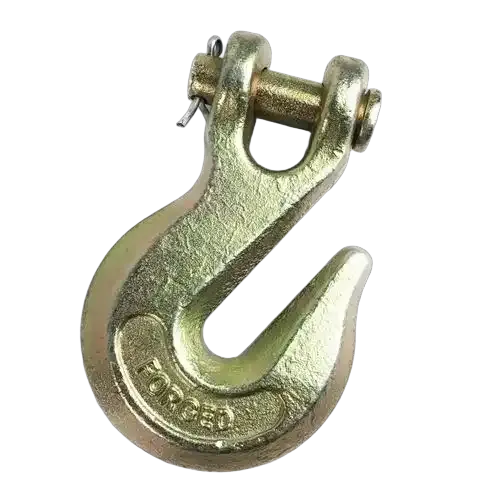
Forged End Hooks (S/F/J/Hooks)
TrustWebbing Forged End Hooks (S/F/J-Hooks) are drop-forged, heat-treated cargo control fittings engineered for 1"–4" tie-down and ratchet strap assemblies. Available as S-hooks, flat/snap hooks, and J-hooks with zinc or galvanized finishes, they deliver high breaking strength, corrosion resistance, and precise webbing-slot tolerances for OEM strap fabrication.
Related Applications
Related Industries
Reliable bulk load binder supply with flexible MOQs tailored for growing operations
Request Your Bulk Load Binder Quote