

Selecting the right equipment partner for heavy transport hardware is a critical operational decision on job sites. In construction logistics, securing earthmoving equipment, structural steel, and prefabricated components requires hardware that withstands dynamic transport loads without deformation. Sourcing an Industrial Steel Load Binder with appropriate specifications prevents transit incidents and maintains regulatory compliance. This guide outlines practical load binder supplier selection tips for construction projects, focusing on mechanical performance, metallurgical standards, and manufacturing consistency.
Verify Steel Grades, Load Capacities, and Safety Ratios
When procuring load binders for heavy civil works, verifying mechanical strength parameters is the initial technical hurdle. Construction machinery requires binders rated for substantial capacities, typically ranging from a 10 Ton to 25 Ton working threshold. Suppliers must provide clear traceability indicating that components are fabricated from heat-treated carbon steel to withstand extreme shock loading during transport.
Unlike standard light-duty tie-downs used in commercial freight, heavy equipment transport demands a verified 3:1 safety factor across all tensioning mechanisms. Ensure the manufacturer stamps working load limits (WLL) and capacity thresholds directly into the binder handle and forged housing, ensuring field crews avoid accidental overloading during pre-trip rigging.
Assess Mechanism Type: Lever vs. Ratchet Functionality
A key evaluation factor during supplier vetting is their portfolio of tensioning styles. Suppliers should offer configurations tailored to specific job-site safety policies and load dynamics, including both Lever Type and Hook & Handle assemblies.
Lever binders allow rapid tensioning and release with fewer moving parts, which is advantageous in high-cycle hauling of uniform civil materials. However, ratchet-style mechanisms provide micro-adjustability and reduce energy-release risks during uncoupling. A capable manufacturing partner should guide your team on matching mechanism design to your fleet's specific transport conditions and chain grades.
Evaluate Surface Finish and Environmental Durability
Construction environments subject securement hardware to abrasive aggregates, moisture, road salt, and harsh weather. Substandard surface treatments lead to premature oxidation, binding the pivot points and weakening structural integrity.
Ensure your supplier provides robust protective finishes. High-visibility yellow powder paint offers fast visual verification across staging yards, while electro-zinc plated coatings deliver superior barrier protection against atmospheric corrosion. Binders must retain smooth thread or pivot movement through continuous exposure cycles to prevent field binding.
Review End-Fitting Compatibility and Complementary Hardware
A reliable hardware manufacturer must supply end-fittings engineered to interface cleanly with transport chains and anchor points. Look for suppliers who produce integrated assemblies equipped with Forged End Hooks (S/F/J/Hooks) manufactured from heat-treated forged steel.
Working with a full-line hardware supplier simplifies procurement across both rigid chain securement and synthetic systems like a Standard Heavy Duty Ratchet Strap (3333 lbs - 6667 lbs WLL). Centralizing your lashing and binder sourcing ensures dimensional compatibility, matched load ratings, and consistent quality documentation across your entire site fleet.
Frequently Asked Questions
What working load capacity is recommended for construction load binders?
For securing heavy machinery and construction materials, binders engineered with a capacity ranging from 10 Ton to 25 Ton and an industry-standard 3:1 safety factor are typically specified to handle dynamic transit stress.
How do lever-type and ratchet-type binders compare for job-site hauling?
Lever binders offer quick engagement with minimal components, making them fast to operate. Ratchet binders utilize a threaded screw mechanism that allows precise tension adjustments and eliminates sudden recoil risks during tension release.
What finishes are most effective for load binders exposed to outdoor elements?
High-visibility industrial yellow paint and zinc plating are the standard finishes. Zinc plating provides durable corrosion resistance against road salts, while high-visibility coatings allow quick visual inspections on busy project sites.
Related Resources
Related Products (3)
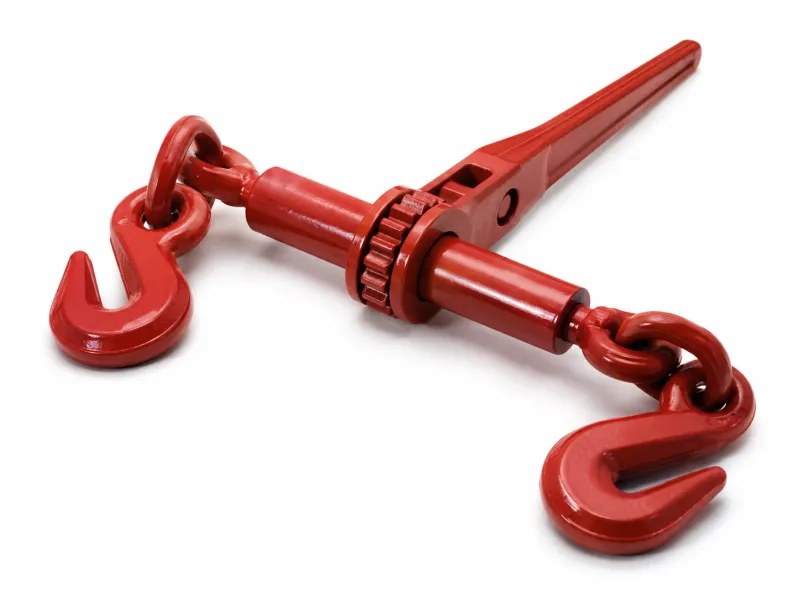
Industrial Steel Load Binder
Heavy-duty industrial ratchet load binder engineered for securing steel coils, machinery, and oversized freight. Features a drop-forged steel ratchet handle, hardened grab hooks, and a corrosion-resistant finish for demanding transport applications. Delivers reliable tensioning, EN 12195-2 and DOT compliance, and a 3:1 safety factor for professional cargo control operations.
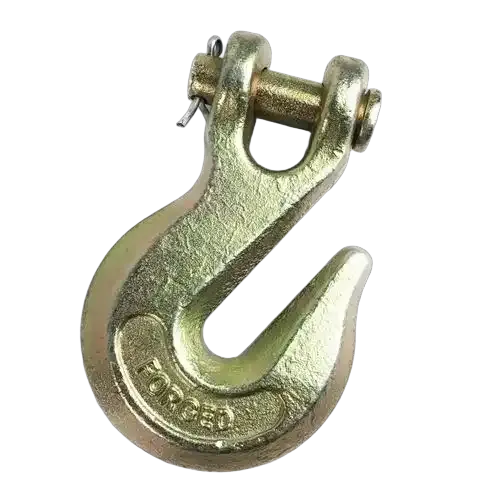
Forged End Hooks (S/F/J/Hooks)
TrustWebbing Forged End Hooks (S/F/J-Hooks) are drop-forged, heat-treated cargo control fittings engineered for 1"–4" tie-down and ratchet strap assemblies. Available as S-hooks, flat/snap hooks, and J-hooks with zinc or galvanized finishes, they deliver high breaking strength, corrosion resistance, and precise webbing-slot tolerances for OEM strap fabrication.
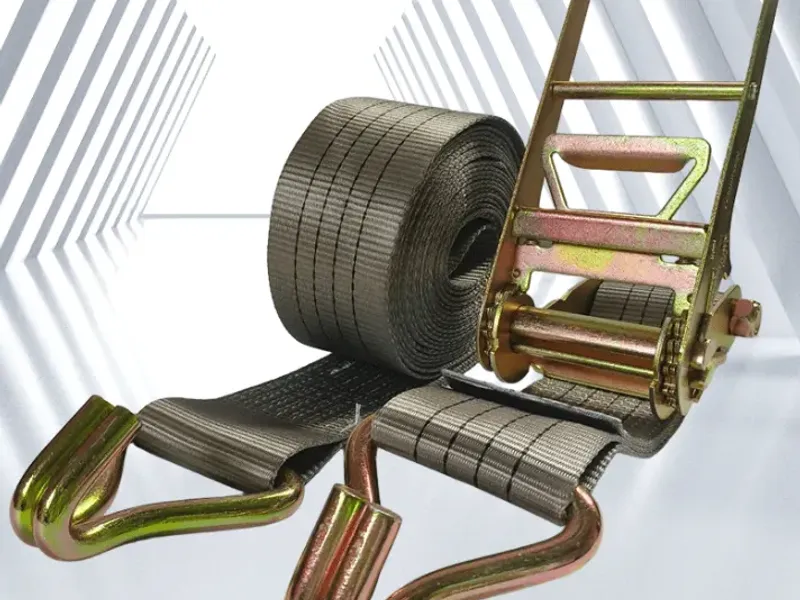
Standard Heavy Duty Ratchet Strap
Standard Heavy Duty Ratchet Strap with 2" polyester webbing and forged wire hooks, delivering a 10,000 lbs breaking strength and 3,333 lbs working load limit. Engineered for reliable cargo securement on flatbeds, trailers, and pickups, it offers corrosion-resistant hardware, low-stretch webbing, and a smooth-action ratchet for repeatable, safe tie-downs.
Related Categories
Related Applications
Related Industries
Essential technical criteria and vetting strategies for sourcing heavy-duty cargo securement hardware
Contact Our Industrial Hardware Specialists