

Calculating the right quantity of ratchet strap assemblies for your fleet isn't guesswork—it's a formula. As of 2026, fleet operators managing 50+ trucks face the same challenge: how many straps to stock, when to reorder, and which configurations to prioritize. We prep bulk kits every week for logistics companies across North America and Europe, and the pattern is clear. Under-ordering causes compliance gaps; over-ordering ties up capital in unused inventory. This guide walks you through the exact calculation method we use with our partners.
The Fleet Strap Calculation Framework
Before placing a bulk order, you need a repeatable formula. Here's the standard calculation we apply across trucking, construction, and industrial fleets.
The Basic Formula
For each vehicle in your fleet, multiply the number of securement points by the strap-to-anchor ratio, then add a 15-20% buffer for replacements and spares.
Key Variables in Your Calculation
Example: 100-Truck Fleet Calculation
Compared to loose strap components, pre-assembled kits cut prep time by roughly 60% and reduce hardware mismatches to near zero.
Choosing the Right Strap Configurations
Not all ratchet straps are interchangeable. Fleet operators must match strap specifications to their most common cargo types and trailer configurations.
Common Fleet Configurations
Hardware Compatibility Checklist
Bulk Ordering and Inventory Management
Once you've calculated your base quantity, the next step is ordering efficiently. Fleet operators who streamline their strap procurement see significant cost and time savings.
Bulk Order Best Practices
Reorder Point Calculation
Unlike generic suppliers, we provide batch tracking with serial numbers on all Standard Heavy Duty Ratchet Straps, enabling you to trace any strap back to its manufacturing date and test certification.
Quality Verification and Compliance
Calculating quantity is only half the equation. Ensuring your fleet receives compliant, quality-tested straps protects your operations and your compliance record.
What to Verify on Delivery
Fleet Compliance Documentation
Maintain a strap inventory log with the following fields for each batch: purchase date, quantity received, strap specifications (WLL, length, width), test certificate reference, and deployment date per vehicle. This documentation supports D.O.T. audits and insurance requirements.
For cargo securement and transportation compliance, ensure your straps meet the minimum securement count requirements: one strap per 5 feet of cargo length or one per 2,000 lbs of cargo weight, whichever is greater.
Frequently Asked Questions
How many ratchet straps does a standard 53-foot trailer need?
A standard 53-foot trailer requires a minimum of 11 ratchet straps per D.O.T. regulations. This follows the rule of one strap per 5 feet of cargo length. For heavy or dense cargo, increase to one strap per 2,000 lbs of cargo weight. Most fleet operators stock 12-14 straps per trailer to account for spares and varied load configurations.
What's the difference between lift WLL and drag WLL on E-Track straps?
Lift WLL refers to vertical lifting applications, while drag WLL applies to horizontal securing forces. E-Track Ratchet Strap Assemblies typically rate at 1,600 lbs for lift and 3,333 lbs for drag. The higher drag rating reflects the different stress vectors—horizontal forces distribute differently than vertical loads. Always match your strap rating to the primary application direction.
How often should fleet ratchet straps be replaced?
Replace ratchet straps every 18-24 months under normal operating conditions, or after 500+ stress cycles, whichever comes first. Inspect before each use for cuts, abrasion, hardware deformation, or UV damage. Standard Heavy Duty Ratchet Straps with 1000D polyester webbing typically outlast polypropylene variants by 2-3x in outdoor exposure conditions.
Can I mix different strap manufacturers in my fleet?
Yes, but standardization reduces complexity. Mixing manufacturers requires verifying that all straps meet the same WLL and break strength standards. We recommend using the same configuration across 80%+ of your fleet to streamline training, inspection, and reordering. When mixing is necessary, maintain separate inventory logs for each manufacturer and batch.
What bulk order quantities qualify for fleet pricing?
Bulk pricing typically applies to orders of 100+ straps or 50+ SKUs. Fleet accounts receive priority production scheduling, dedicated account management, and consolidated shipping. For orders above 500 units, we offer custom configuration matching and batch serialization. Contact our fleet sales team to discuss your specific volume requirements.
Related Resources
Related Products (3)
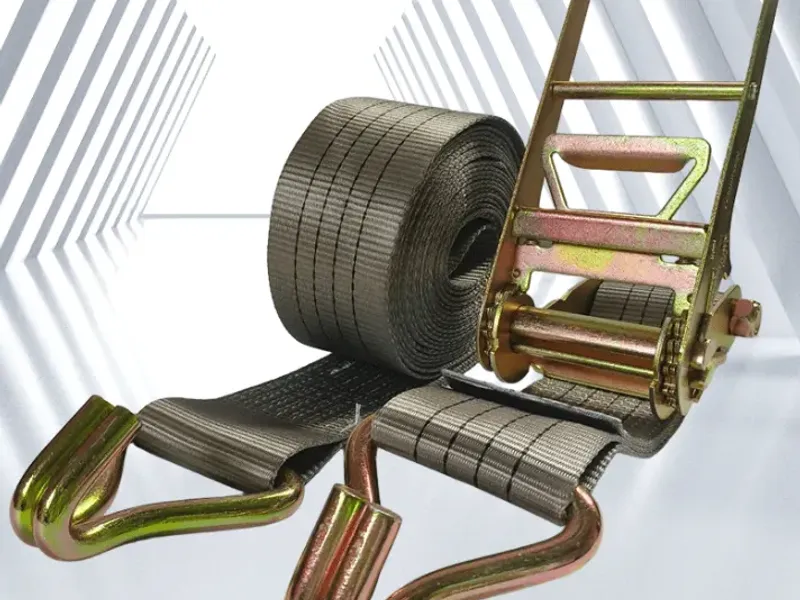
Standard Heavy Duty Ratchet Strap
Standard Heavy Duty Ratchet Strap with 2" polyester webbing and forged wire hooks, delivering a 10,000 lbs breaking strength and 3,333 lbs working load limit. Engineered for reliable cargo securement on flatbeds, trailers, and pickups, it offers corrosion-resistant hardware, low-stretch webbing, and a smooth-action ratchet for repeatable, safe tie-downs.
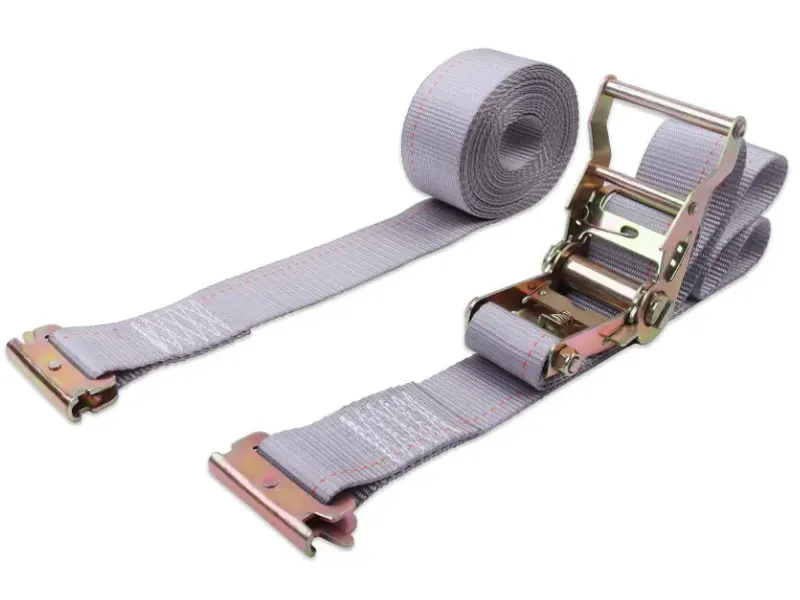
E-Track Ratchet Strap Assembly
Heavy-duty 2-inch E-Track ratchet strap assembly with spring-loaded E-fittings for fast, secure cargo lock-down in enclosed trailers, vans, and warehouses. Features abrasion-resistant polyester webbing, a corrosion-treated ratchet handle, and a 3:1 safety factor. Ideal for logistics fleets, moving companies, and OEM buyers requiring reliable, standards-compliant tie-down hardware.
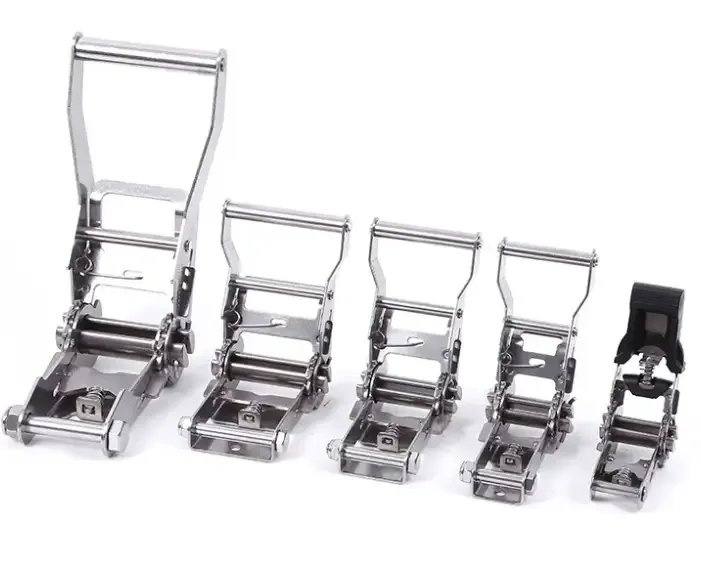
316 Marine Grade Ratchet Strap
The 316 Marine Grade Ratchet Strap combines high-tenacity UV-resistant polyester webbing with corrosion-proof 316 stainless steel ratchet hardware and S-hooks. Engineered for saltwater and coastal environments, it delivers reliable load control, superior rust resistance, and long service life for boats, docks, and marine cargo securing.
Related Categories
Related Applications
Related Industries
Step-by-step guide to sizing your fleet's cargo securement inventory with confidence
Request a Fleet Strap Quote